Weddings on your terms
Written by : Jodie Garneau
If you’re planning a wedding in Montreal and trying to figure out what weddings actually cost in 2026, first of all, take a deep breath. The internet is full of wildly conflicting information, outdated averages, and “budget breakdowns” that don’t reflect what couples are truly spending once contracts start getting signed.
This blog is based on real conversations with couples who were married in Montreal over the last year, along with the actual numbers we’re seeing behind the scenes while planning weddings in the city. We’re specifically looking at moderate-sized weddings in the 80–130 guest range, because that’s where many couples find themselves caught between wanting an elevated experience and trying not to completely lose their minds financially.
Thistle & Thorne Weddings is a Canadian wedding planning company founded by Jodie Garneau, an internationally certified wedding planner who has contributed to more than 400 weddings across Canada. From intimate gatherings to full-scale multi-day celebrations, we work closely with couples to create weddings that feel intentional, immersive, and genuinely reflective of who they are.
Montreal is one of our favourite wedding markets in the country because it offers something increasingly rare: personality. Incredible food, beautiful architecture, strong cultural identity, and venues that don’t feel copy-and-paste. What we’re sharing here isn’t pulled from a generic national survey or recycled wedding statistics. It’s what we actually see on the ground, what couples are being quoted in 2026, and where budgets are realistically landing once all the little details start adding up.
Connect with Our Team To Chat About Your Wedding
Table of Contents
- Article Takeaways
- 1. A real Montreal bride spent $80,000 for 125 guests in 2025 — with a homemade dress — because food, beverage, and service alone cost over $50,000.
- 2. Your venue choice is your budget, because every other decision — guest count, catering cost, and infrastructure — flows directly from it.
- 3. Thistle & Thorne has helped plan over 400 weddings across Canada, and a free call with founder Jodie Garneau is the fastest way to turn an overwhelming budget into a clear, confident plan.
- What Does a Montreal Wedding Actually Cost?
- Where Does the Money Go?
- A Realistic Montreal Wedding Budget at a Glance
- Outdoor vs. Indoor Wedding in Montreal: What’s the Real Cost Difference
- Money Saving Tips for Your Montreal Wedding
- Get Married on a Friday or Sunday
- Consider a Winter Wedding
- Be Strategic About Your Guest List
- Invest in What You’ll Remember, Save on What You Won’t
- Reuse Ceremony Flowers at the Reception
- Ask About the “Next Day” Payment Option
- Bundle Your Vendors Where It Makes Sense
- DIY Selectively — Not Everywhere
- Hire a Wedding Coordinator
- What Is a Wedding Actually About?
- Let’s Talk About Your Wedding Plans
Article Takeaways
1. A real Montreal bride spent $80,000 for 125 guests in 2025 — with a homemade dress — because food, beverage, and service alone cost over $50,000.
2. Your venue choice is your budget, because every other decision — guest count, catering cost, and infrastructure — flows directly from it.
3. Thistle & Thorne has helped plan over 400 weddings across Canada, and a free call with founder Jodie Garneau is the fastest way to turn an overwhelming budget into a clear, confident plan.
What Does a Montreal Wedding Actually Cost?
Forget the generic Canada averages. The real Montreal wedding cost is higher than most blogs will tell you — and knowing that early is one of the most valuable things we can offer you.
Here’s what we know from a real Montreal bride who got married in 2025: her wedding for 125 guests came to $80,000. Here’s the detail that makes that number land differently — she didn’t have a wedding planner, was super scrappy always looking for the best deal (10K for flowers? Nope! Try 3k!) and she didn’t even buy a wedding dress. Her mom made it by hand for $600.
The food, beverage, and service at the venue alone came to over $50,000.
That’s Montreal in 2026. And it’s worth knowing before you fall in love with a venue.
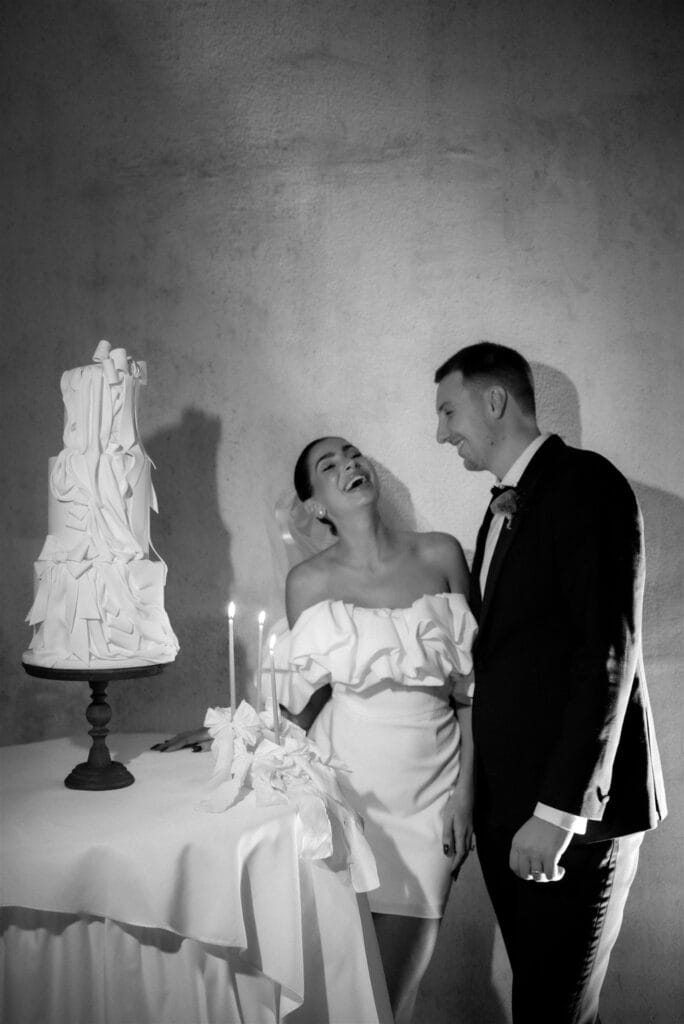
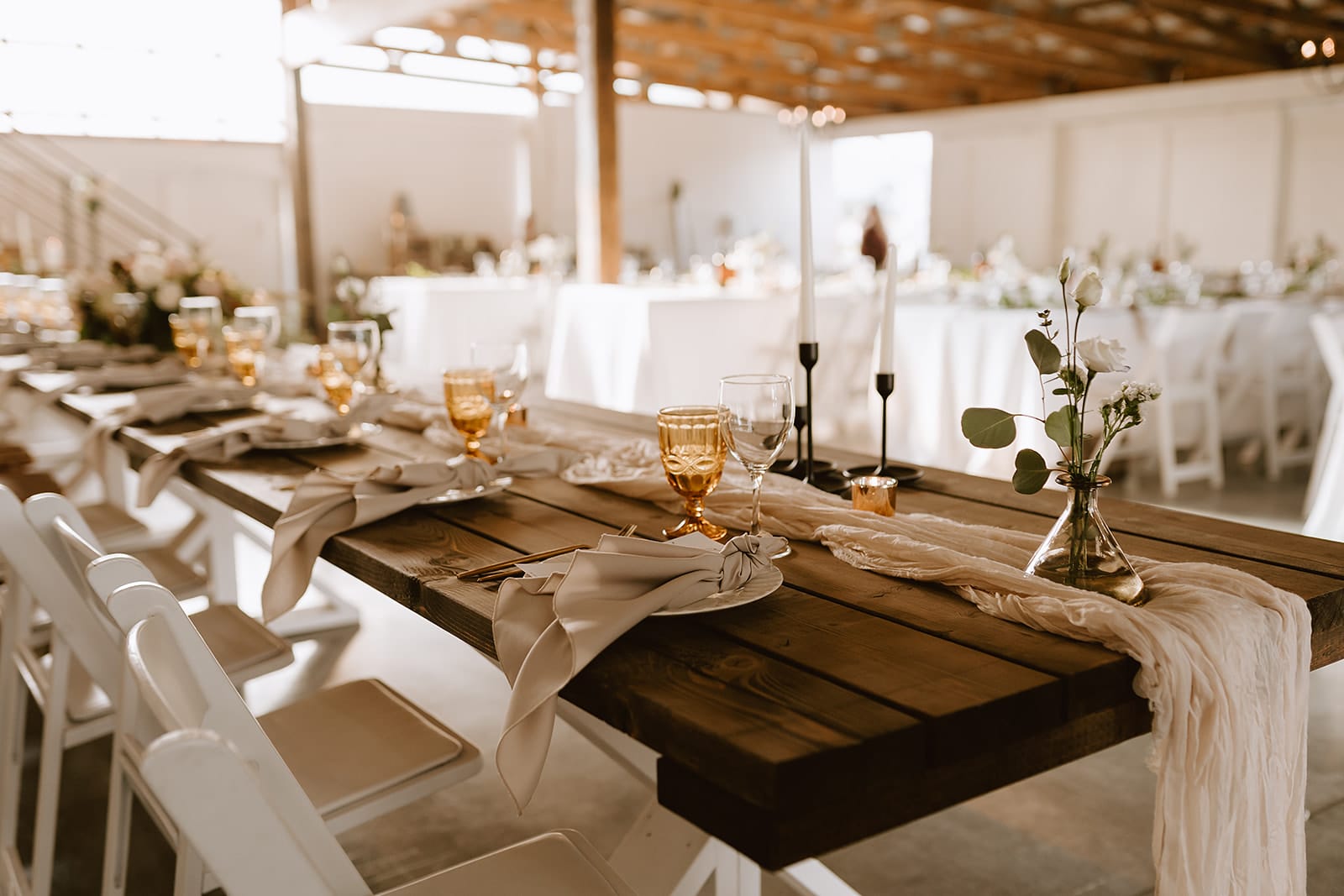
Photo : Sara Rogers photography https://www.sararogers-photography.com/
Where Does the Money Go?
Venue, Food & Beverage: $50,000+
Your venue is your single biggest decision — and your biggest expense. Montreal wedding venues range from grand hotel ballrooms in downtown Montreal to historic buildings in Old Montreal with old world charm and high ceilings, to modern spaces with modern elegance and warm ambiance. Each type of space comes with a different price point, a different atmosphere, and a different set of what’s included.
For a wedding of 60 to 125 guests, food, beverage, and service at a Montreal (we are talking in the city, not a small town just outside the city) the reception venue will start at $50,000. When you’re evaluating wedding venues, pay close attention to what the per-person catering cost includes — alcohol, cake cutting fees, and late-night snacks are common additional costs that don’t show up in the headline number.
Yay Love Wedding Photography — https://www.yaylove.ca/
The Most Expensive Venue in Montreal
There are a number of “wow” venues in Montreal. Right downtown, sits the iconic Ritz Carlton Montreal — one of the most beautiful wedding venues in the city, known for its luxurious atmosphere and impeccable service. The Ritz Carlton Montreal is a stunning option for couples who want maximum elegance, though it sits at the top of the budget range. Be prepared for a $100k+ wedding for this premium venue and others like it; There are also beautiful wedding venues near Atwater Market in Saint-Henri with exposed brick and industrial character, and plenty of options in between.
Photography & Videography: $4,000 – $15,000
Your photos and video are what you keep long after the big day. A quality Montreal wedding photographer starts around $4,000-$6,000 if you can find a good deal for an artist you love, but prices can go up to $15k, with videography adding another $2,000 to $8,000. For many couples, this is one of the last places to save money, as these are the moments you’ll look back on for the rest of your life.
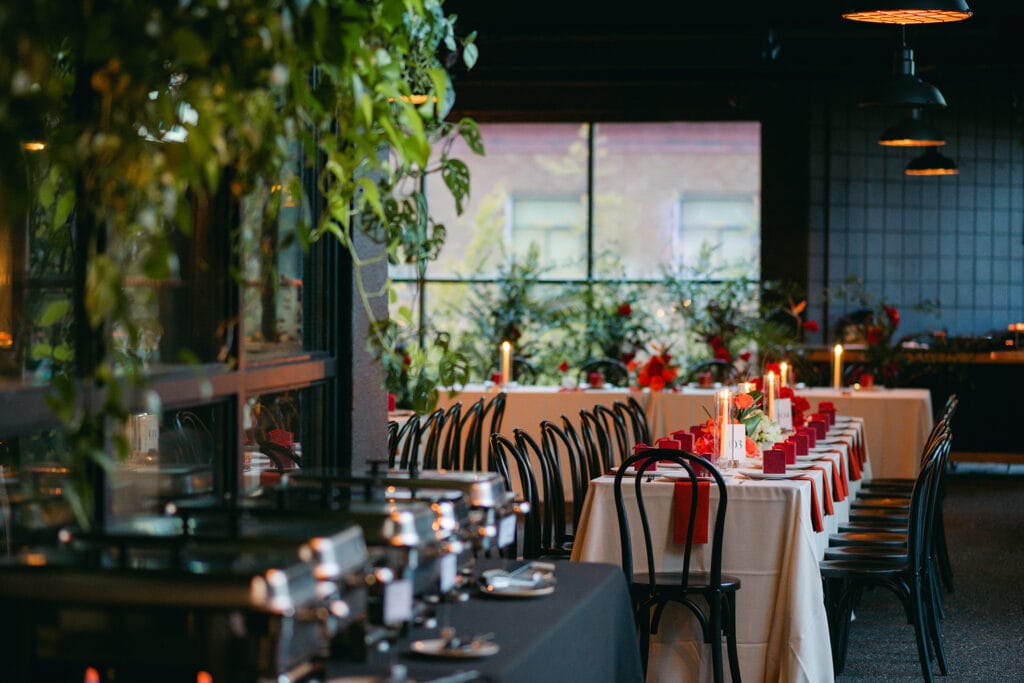
Ariann BT Photo — https://www.ariannbt.com/
A real and recent invoice from one of our current Montreal couples is sitting cleanly at the upper end of that range, coming in at approximately $14,000 once travel and taxes are included.
Flowers & Décor: $6,000-$50,000
Flowers and decorations set the tone for your special day. Whether you’re drawn to lush romantic arrangements or clean minimalist design, your florist can help you create a look that feels intentional and beautiful. In 2026, you will need to really dig to find a flower budget at $3k (and by that, we mean really prioritize the items you want and cut practically everything else), with most floral quotes coming in around $15k for downtown Montreal venues, which are larger, and will fit that “average sized wedding” of aprox. 100 guests.
One of our real 2026 brides is currently anticipating a floral total approaching $20,000, and her vision is genuinely not over the top. It’s tasteful, elevated, and design-focused, but not extravagant by modern wedding standards, which really highlights how dramatically floral pricing has shifted in recent years.
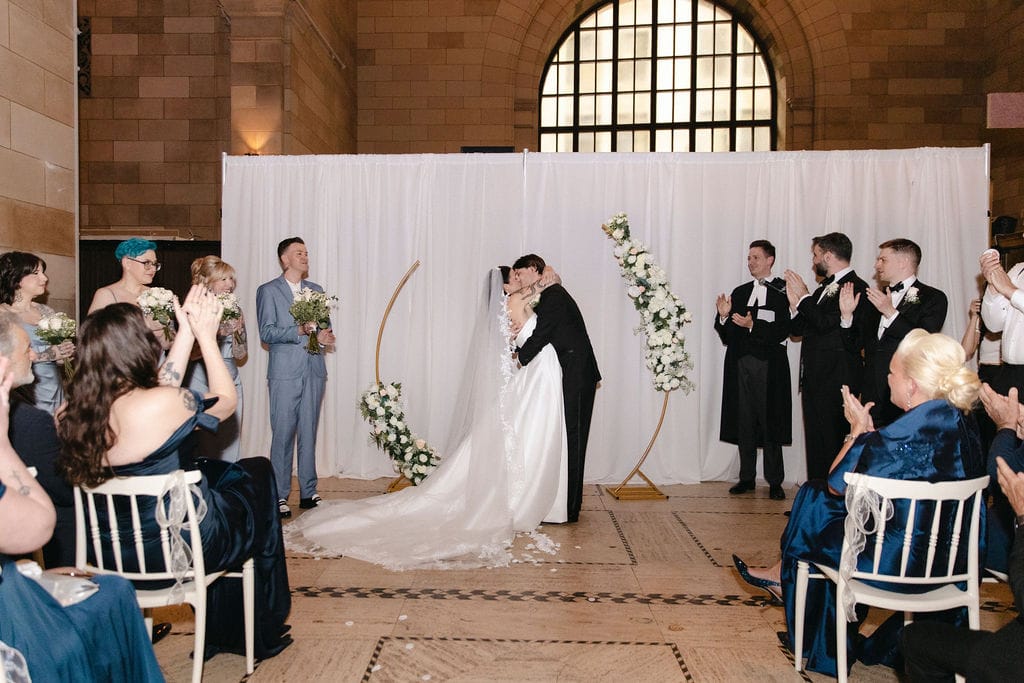
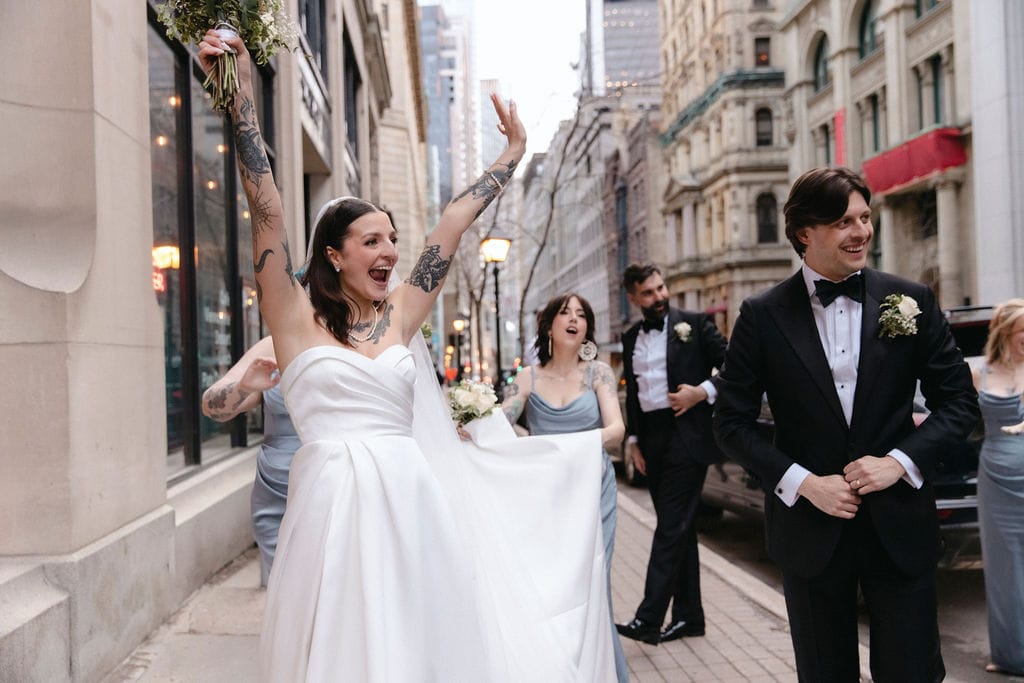
Ariann BT Photo — https://www.ariannbt.com/
Decor is an entirely different ballgame. Many of Montreal’s most visually striking venues, especially historic buildings and unconventional spaces, are essentially blank canvases without the infrastructure that traditional banquet halls already include. Couples are often renting far more than just “pretty” décor items. They’re bringing in everything from tables, chairs, linens, glassware, flatware, candles, drapery, bars, catering equipment, tenting, and specialty lighting, all before florals are even considered.
One of our current 2026 Montreal-area weddings at Crew Collective is anticipating rental costs approaching $10,000 from a single rental company alone for furniture, tableware, linens, drapery, glassware, bar structures, serving pieces, transportation, and installation fees. Another of our 2026 couples at Chateau Ste Agnes is currently sitting at over $14,000 with just one rental vendor for tenting, tables, linens, catering equipment, candles, specialty serving ware, transportation logistics, and installation fees.
And importantly, those totals don’t represent the couple’s full décor spend. These invoices are each from only one rental company and don’t include additional specialty rentals sourced elsewhere, things like audio guestbooks, custom signage, lounge furniture, photo booth concepts, statement bars, interactive food stations, or niche design elements that often require separate vendors entirely.
One of the biggest surprises for couples planning weddings in Montreal is realizing how quickly the “invisible” infrastructure costs add up. The romantic historic venue may not come with a commercial kitchen, enough glassware, loading access, or even functional prep space for catering teams. Everything that creates the final atmosphere guests experience has to be brought in, installed, transported, and removed, and every one of those steps comes with a price tag.
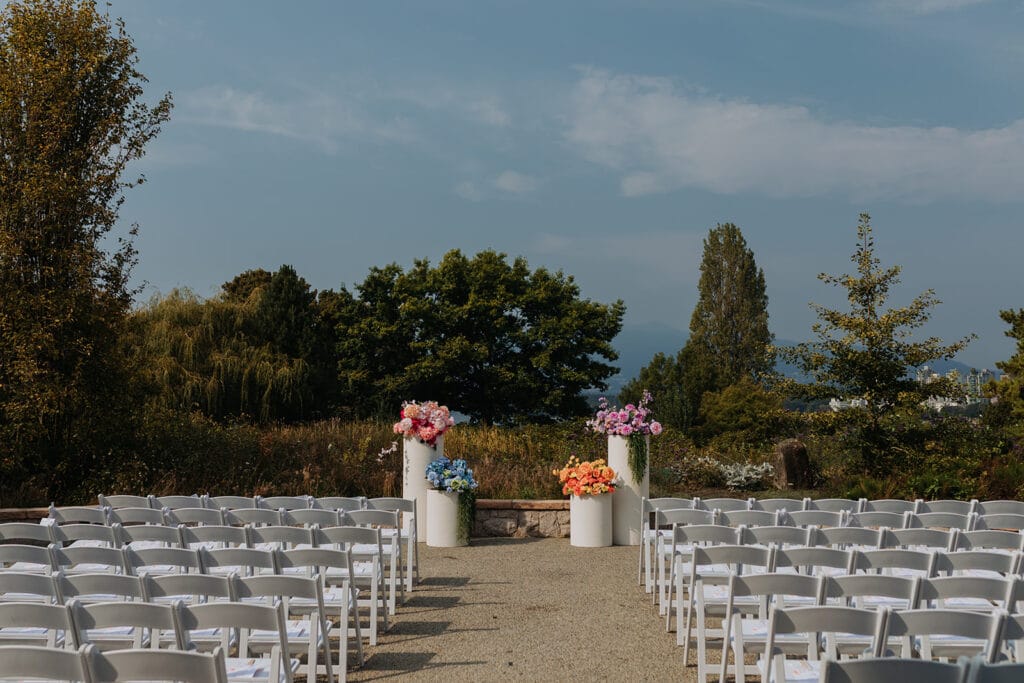
Jen Newman Photography — https://www.jennewmanphotography.com/
Entertainment: $1,800 – $10,000+
A great DJ who keeps the dance floor full all night starts around $1,800- and that would be a steal! A live band runs $3,000 to $10,000 or more. Our brides were quoted $10k for their wedding DJ before doing some deeper digging to find a more affordable option. Either way, book early — peak season Saturdays in summer fill up fast, and the best talent in Montreal goes quickly.
Wedding Attire: $1,500 – $5,000+
Wedding attire continues to have one of the widest pricing ranges of any category in a Montreal wedding budget. For most brides shopping at bridal boutiques or ateliers in the city, a moderate-priced gown including alterations will typically land somewhere between $2,000 and $5,000 in 2026. If you’re envisioning a highly fashion-forward or designer gown, it’s very easy to exceed that range, with many dresses climbing well beyond $7,000–$10,000 before accessories or customization are considered.
Observations About Style Costs
One thing that’s especially interesting about Montreal is that the local bridal fashion market has a very distinct point of view. After visiting several bridal ateliers throughout the city, we’ve noticed that many collections lean heavily romantic, classic, and traditionally elegant, which aligns beautifully with Montreal’s overall aesthetic culture and architecture. That being said, brides searching for something more modern, bohemian, editorial, or unconventional may find themselves expanding their search outside of Montreal itself to find styles that better reflect their personality and vision.
Hair and makeup pricing has also increased dramatically in recent years, particularly for highly sought-after artists. In many cases, couples are hiring two separate professionals, one specializing in hair and another focused exclusively on makeup, which can mean multiple travel fees, service minimums, and assistant fees layered into the overall total.
Minimum spends have become especially common amongst established beauty artists known for high-quality work. One of our 2026 brides encountered a makeup minimum spend of $2,000, which required distributing services across bridesmaids and additional guests in order to meet the booking requirement. In her case specifically, bridal makeup and the trial alone totalled approximately $750, while bridesmaid makeup services were priced around $250 per person before gratuity.
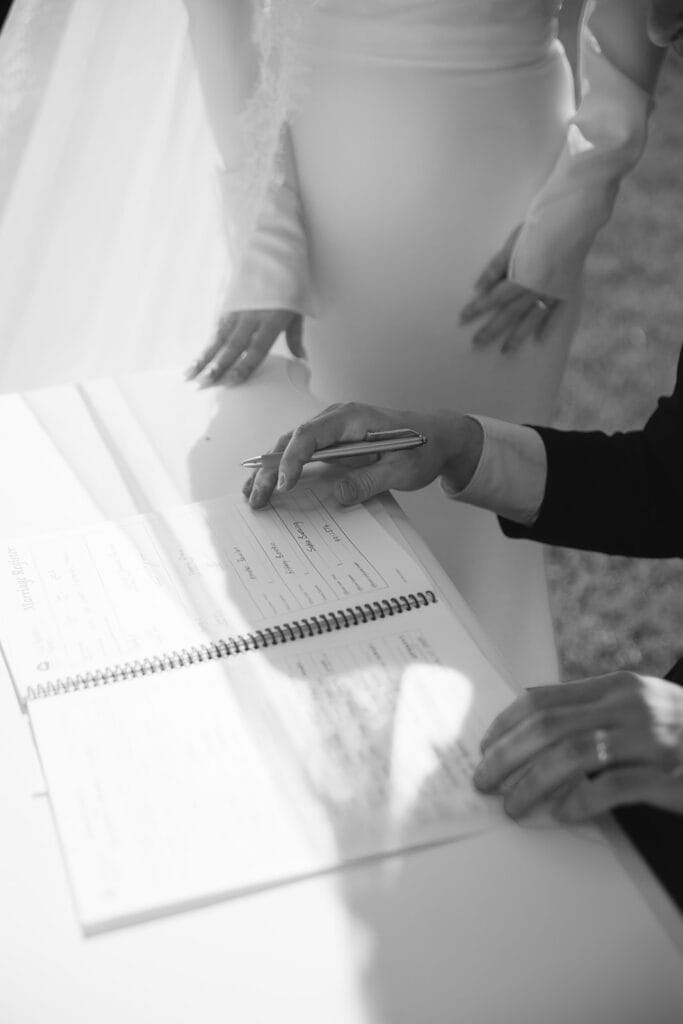
Officiant & Marriage License: $400 – $1,200+
This is one of the smaller line items in a Montreal wedding budget, but it’s also one of the easiest to underestimate. Between the marriage licence itself, officiant fees, rehearsal attendance, travel, and administrative filing costs, most couples in 2026 are realistically landing somewhere between $400–$1,200 depending on the type of ceremony they’re planning and the experience level of the officiant.
Quebec also has a few legal requirements that couples from outside the province often don’t anticipate. One of the biggest is the mandatory publication of the Declaration of Marriage, which must be publicly posted for at least 20 days before the wedding can legally take place. This means couples need to account for additional paperwork and timing earlier in the planning process than they might in other provinces.
For couples planning destination weddings in Montreal or coordinating guests from multiple provinces or countries, these administrative timelines are especially important to stay ahead of.
Brooklyn Grace Wedding Photography — https://brooklyngrace.mypixieset.com/
Transportation: $800 – $5,000+
Transportation is one of those wedding expenses that couples often underestimate because the pricing can change dramatically depending on how the timeline is structured. In Montreal especially, where weddings frequently involve multiple locations, historic venues with limited parking, hotel transfers, or photography stops throughout the city, transportation can quickly move beyond a simple “pick-up and drop-off” service.
Many transportation companies charge significantly more once waiting periods, standby time, or multiple stops are involved. In practice, this often converts a reservation from a flat transfer into hourly chauffeur service, where both the driver and vehicle remain reserved exclusively for the wedding timeline.
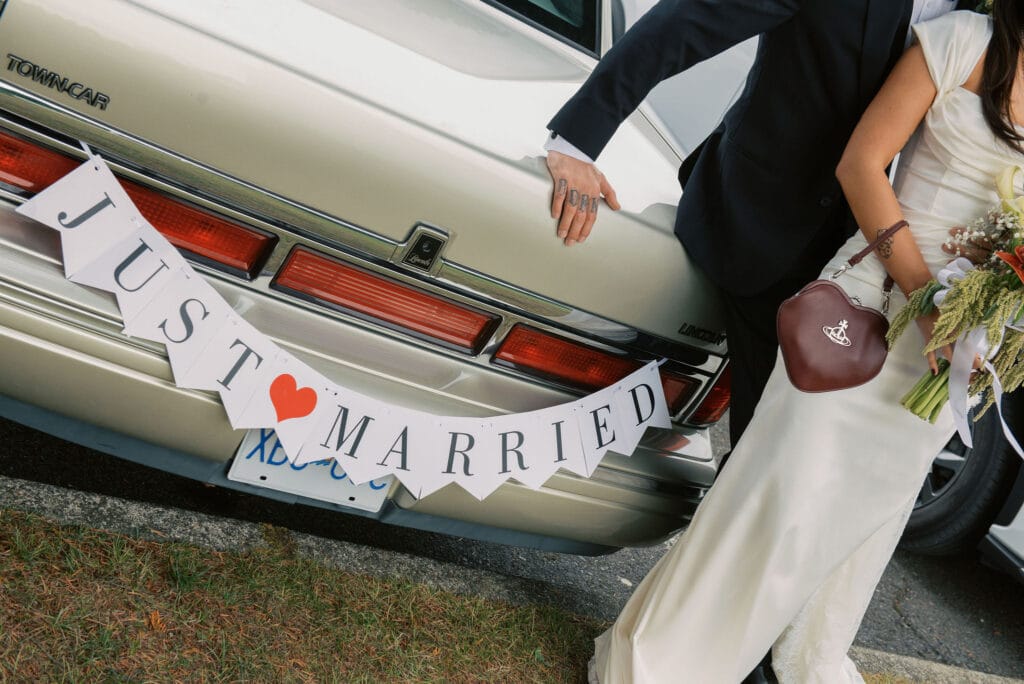
One of our 2026 Montreal couples recently updated their wedding-day transportation schedule to include photo stops and waiting periods between locations. What originally began as a simple two-vehicle transfer booking at approximately $350 quickly increased to nearly $1,000 plus tax once the reservation shifted to hourly service with standby time factored in.
Laura Emma Photography — https://www.lauraemmaphotography.com/
And that’s still relatively moderate by Montreal wedding standards. Once couples begin adding guest shuttles, late-night return transportation, larger SUV fleets, sprinter vans, or multiple vehicles operating simultaneously across the city, transportation can very easily climb into the several-thousand-dollar range.
This becomes especially common with weddings at historic or unconventional venues, where parking may be limited, hotels are spread across different neighbourhoods, or guests are travelling between separate ceremony, cocktail, and reception locations throughout the day.
Taxes & Gratuities: Add 25–30%
This is where many couples get caught off guard. GST and Quebec Sales Tax (QST) add roughly 15% to most services. On top of that, tipping your vendors — caterers, bartenders, photographers, musicians — at 10 to 20% is standard. Build this into your wedding budget from day one, not as an afterthought.
A Realistic Montreal Wedding Budget at a Glance
| Category | Estimated Cost |
| Venue, Food & Beverage | $45,000 – $90,000+ |
| Photography & Videography | $6,000 – $15,000+ |
| Flowers & Décor | $8,000 – $30,000+ |
| Entertainment | $2,500 – $15,000+ |
| Attire & Make Up | $3,000 – $15,000+ |
| Officiant & License | $400 – $1,200+ |
| Transportation | $800 – $5,000+ |
| Taxes & Gratuities | $10,000 – $20,000+ |
| Contingency (10%) | $5,000 – $10,000 |
| Total Estimate | $85,000 – $150,000+ |
Outdoor vs. Indoor Wedding in Montreal: What’s the Real Cost Difference?
Montreal is a stunning city to get married in outdoors — parks, rooftop terraces, the Old Port waterfront, the mountains just beyond the island. But outdoor weddings come with a different set of costs that catch many couples off guard.
Venue Rental
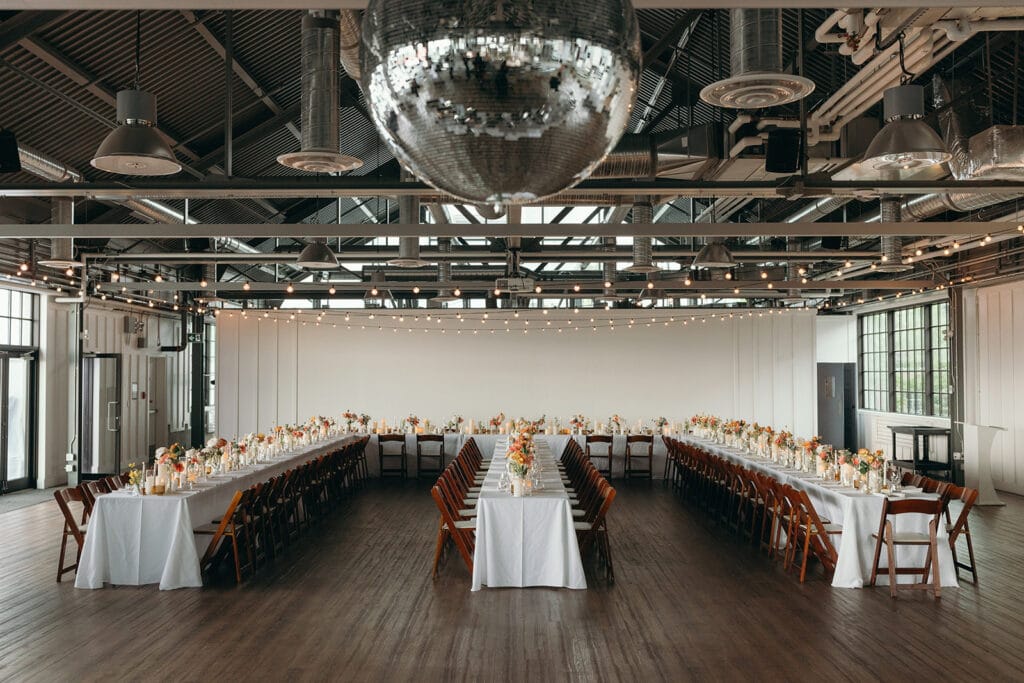
Indoor: Your venue fee typically covers everything — walls, roof, tables, chairs, a dance floor, and often a built-in catering kitchen. The reception room price is predictable and the atmosphere is guaranteed regardless of weather.
Outdoor: Many outdoor spaces in Montreal charge a site rental fee but provide very little infrastructure. You’re essentially renting a beautiful location and building an event on top of it. Tenting, flooring, power, washrooms, and lighting all become your responsibility — and your expense. A quality tent for 100 guests starts at $5,000 to $10,000. Add flooring, sidewalls, climate control, and lighting, and you’re looking at $15,000 to $25,000 before a single guest arrives.
The Godards Photography — https://thegodards.com/
Weather Contingency
Indoor: Not a concern. Your space is your contingency plan. Cost: $85,000 – $150,000+
Outdoor: Montreal weather is genuinely unpredictable — beautiful in June, July, and August but prone to sudden rain and wind. You need a Plan B baked into your contract and your budget. Summer weddings outdoors are stunning when they work, but always plan for the possibility that they won’t.
Catering & Kitchen Infrastructure
Indoor: Many reception venues have commercial kitchens on site. Your caterer walks into a fully equipped space, which keeps costs down and your menu options wide.
Outdoor: Unless your outdoor venue has a permanent kitchen nearby, you’ll need to bring in mobile kitchen equipment or hire a caterer who works with their own setup. This limits your vendor choices and adds to catering costs.
Power & Lighting
Indoor: Included. Venues have electrical infrastructure for your DJ, catering team, and ambient lighting.
Outdoor: You’ll likely need a generator and a proper lighting plan. A beautiful outdoor evening reception needs more than string lights — budget $2,000 to $5,000 for a setup that does justice to the space and the moment (especially for outdoor kitchen facilities, lighting pathways to parking and washrooms, and dance floor lighting).
Permits
Indoor: Your venue typically handles permitting through their existing operating licence, especially if they are a full-service wedding or hospitality venue.
Outdoor: Depending on your location in Montreal, especially public parks, waterfront areas, private estates, or unconventional venues, you may require city permits and additional coordination surrounding alcohol service, tenting, noise bylaws, or guest capacity. Quebec’s liquor regulations can also catch out-of-province couples by surprise, particularly when working with venues that are not traditionally used for weddings. While the permit costs themselves are often relatively modest, the administrative process and timelines absolutely need to be factored into the planning process early. A strong wedding planner or coordinator can help navigate these requirements before they become a last-minute stressor..
So Which Costs More?
An outdoor wedding done properly will almost always cost more than a comparable indoor celebration — sometimes $15,000 to $30,000 more once all the infrastructure is accounted for. That said, the right outdoor setting in Montreal can create a dream atmosphere that no reception room can replicate. Go in with eyes open, work with someone who has done it before, and the result can be the most beautiful day of your life.
Brooklyn Grace Wedding Photography — https://brooklyngrace.mypixieset.com/
Money Saving Tips for Your Montreal Wedding
A Montreal wedding will cost what it costs — but that doesn’t mean every dollar has to be spent the same way. Here’s where couples find real savings without giving up what matters most.
Get Married on a Friday or Sunday
Saturday is the most expensive wedding day, period. Many Montreal wedding venues and vendors offer meaningful discounts for Friday evenings and Sundays — sometimes 10 to 20% off. Your guests will still show up. The dance floor will still be full. And you’ll keep thousands of dollars in your pocket.
Consider a Winter Wedding
November through March is significantly quieter for Montreal weddings, and pricing reflects that. Venues are more flexible, you’ll have a wider choice of photographers with more availability, and florists aren’t stretched thin. Winter weddings in Montreal can also be genuinely stunning — the city is made for it — and your photos will look like nothing anyone else has.
Be Strategic About Your Guest List
Your guest count drives more of your budget than almost any other single decision. Every person you add means more catering costs, a larger space to accommodate everyone, more table settings, and often a bigger venue. Trimming 20 guests doesn’t just save you their plate cost — it has a ripple effect across nearly every line item. A more intimate wedding isn’t a lesser wedding. For many couples, it ends up being the better one.
Invest in What You’ll Remember, Save on What You Won’t
Go back to the Ramit Sethi principle: spend extravagantly on what matters to you, and cut mercilessly on what doesn’t. Most couples remember the food, the music, the photos, and the people in the room. Decide what your top three priorities are before you start planning, and let those guide where the money goes.
Reuse Ceremony Flowers at the Reception
Work with your florist to design ceremony arrangements that can be moved and repurposed — altar pieces that become centrepieces, for example. It’s one of the easiest ways to get more visual impact out of your floral budget and create a beautiful, cohesive look across both your ceremony and reception spaces.
Ask About the “Next Day” Payment Option
Some Montreal reception halls will allow you to settle a portion of your bill the day after the wedding using gift money received on the night. If cash gifts are common in your family or community, this is worth asking every venue about during your initial conversations.
Bundle Your Vendors Where It Makes Sense
Oftentimes, your decor company also offers floral design, minimizing administrative and delivery costs. And of course, your wedding planner can often pass along special pricing from your vendors that are only offered to planners as repeat clients.
DIY Selectively — Not Everywhere
DIY can save real money and create genuinely memorable moments. The bride who wore her mother’s handmade dress saved thousands and got something irreplaceable. That worked beautifully. Choose DIY moments that play to real strengths in your community and your circle, and leave the rest to professionals who do it every weekend.
Hire a Wedding Coordinator
This one surprises people, but it’s true: a good wedding coordinator saves you money. They know which vendors are worth the price, which ones have hidden fees in their contracts, and how to protect your budget at every stage of planning. The investment in coordination often pays for itself — and then some — in mistakes avoided and stress eliminated.
Pala’s Photos and Kickassery — https://palasphotos.com/
What Is a Wedding Actually About?
Before you finalize a single vendor, ask yourself a more important question: what do you actually care about?
Ramit Sethi, author of I Will Teach You to Be Rich and one of the most recognized voices in personal finance, puts it this way: “Spend extravagantly on the things you love, and cut costs mercilessly on the things you don’t.” He calls this living your Rich Life — and the point is that your Rich Life is yours alone. Nobody else gets to define it.
For some couples, the wedding is about the family in the room. The 125 people who travelled to downtown Montreal, showed up, and celebrated with you. If that’s you, put your money into the catering, the space, the open bar, and the dance floor — and feel good about every dollar of it.
For others it’s the dress. The photos. The flowers. The feeling of walking into a room that looks like a dream and takes your breath away.
There’s no wrong answer. The bride who spent $80,000 on a beautiful wedding and wore a $600 dress her mom made? She knew exactly what her special day was about. She spent accordingly, and it was the most beautiful day of her life.
Know what your celebration is for. Build your budget around that. And enjoy every moment of planning it.
Corissa Fir Photography — https://corissafir.com/
Let’s Talk About Your Wedding Plans
Every Montreal wedding is different, and your budget conversation deserves more than a blog post. Whether you’re just starting to dream or you’re ready to start booking your perfect venue, Thistle & Thorne would love to connect.
Montreal Wedding Plannerhttps://thistleandthorneweddings.com/wedding-planner-montreal/
Weddings on your terms
Written by : Jodie Garneau
If you’ve been seeing citron and chartreuse everywhere lately… you’re not imagining it. From fashion runways to Pantone predictions to wedding TikTok, yellow is back — but not the highlighter, sunflower-in-every-vase kind. We’re talking citrus-forward. Sophisticated. Editorial.
And if you caught our Glowing Vancouver Wedding Inspo with Citrus-Hued Blooms featured in Rocky Mountain Bride then you already know: this isn’t just a trend we’re watching. It’s one we designed — and just won Best Styled Creative Shoot (2025) at the WPIC awards for.
Let’s talk about why citron and chartreuse are quietly becoming the colour story of 2026 weddings — and how to use them without making your wedding look like a lemon stand.
Need Help Planning Your Yellow Wedding? Work With Thistle & Thorne Wedding Planners!
TABLE OF CONTENTS
- Key Takeaways
- Citron and chartreuse are leading the 2026 yellow wedding theme conversation.
- Yellow works best when layered with texture, draping, and intentional contrast.
- A yellow and green wedding theme feels elevated when chartreuse is the anchor.
- Editorial-inspired weddings are driving colour trends more than tradition.
- Working with an experienced Wedding Planner ensures bold colour choices feel refined, not chaotic.
- Why Yellow Works for Weddings in 2026
- Picking the Right Shade of Yellow
- Yellow for the Right Skin Tone
- Seasonal and Destination Tips
- Yellow Bridesmaid Dresses: Inspiration
- Yellow Wedding Decor Ideas
Key Takeaways
Citron and chartreuse are leading the 2026 yellow wedding theme conversation.
Yellow works best when layered with texture, draping, and intentional contrast.
A yellow and green wedding theme feels elevated when chartreuse is the anchor.
Editorial-inspired weddings are driving colour trends more than tradition.
Working with an experienced Wedding Planner ensures bold colour choices feel refined, not chaotic.
Why Yellow Works for Weddings in 2026
Let’s clarify something.
Moody palettes had their heyday in the early 2000s. Deep plums. Chocolate browns. Dramatic contrast. That era had its moment. But the trend we’re actually stepping out of right now? Pastels. Neutrals. Dusty mauves. Muted sage. Beige-on-beige-on-beige.
For the past several years, weddings have lived in soft, desaturated territory. Light tones. Whispery palettes. Safe colour choices. And now? Couples are ready to feel something again.
Citron and chartreuse represent a shift toward intentional boldness. Not chaotic colour. Not rainbow maximalism. Just confident, considered saturation. These tones still feel refined — but they carry energy. They photograph with depth. They create dimension in spaces that might otherwise feel washed out.
At the same time, yellow continues to resonate because of what it communicates emotionally. It feels optimistic, calm, and grounded — exactly the kind of atmosphere many couples want to create. Not loud for the sake of it, but expressive in a way that still feels easy and livable. A well-designed yellow palette doesn’t overwhelm a space, it softens it. It creates flow. Guests feel comfortable, relaxed, and connected to what’s happening around them, especially in outdoor settings, garden weddings, and light-filled venues.
We’re seeing couples move from “What’s the safest palette?” to “What colour story actually feels like us?”
That’s why yellow works in 2026. It’s not nostalgia. It’s not retro. It’s bold — but controlled. Optimistic — but elevated. And when layered properly, it feels editorial instead of trendy.
1. Butter Yellow Wedding Theme (The Softer Sister)
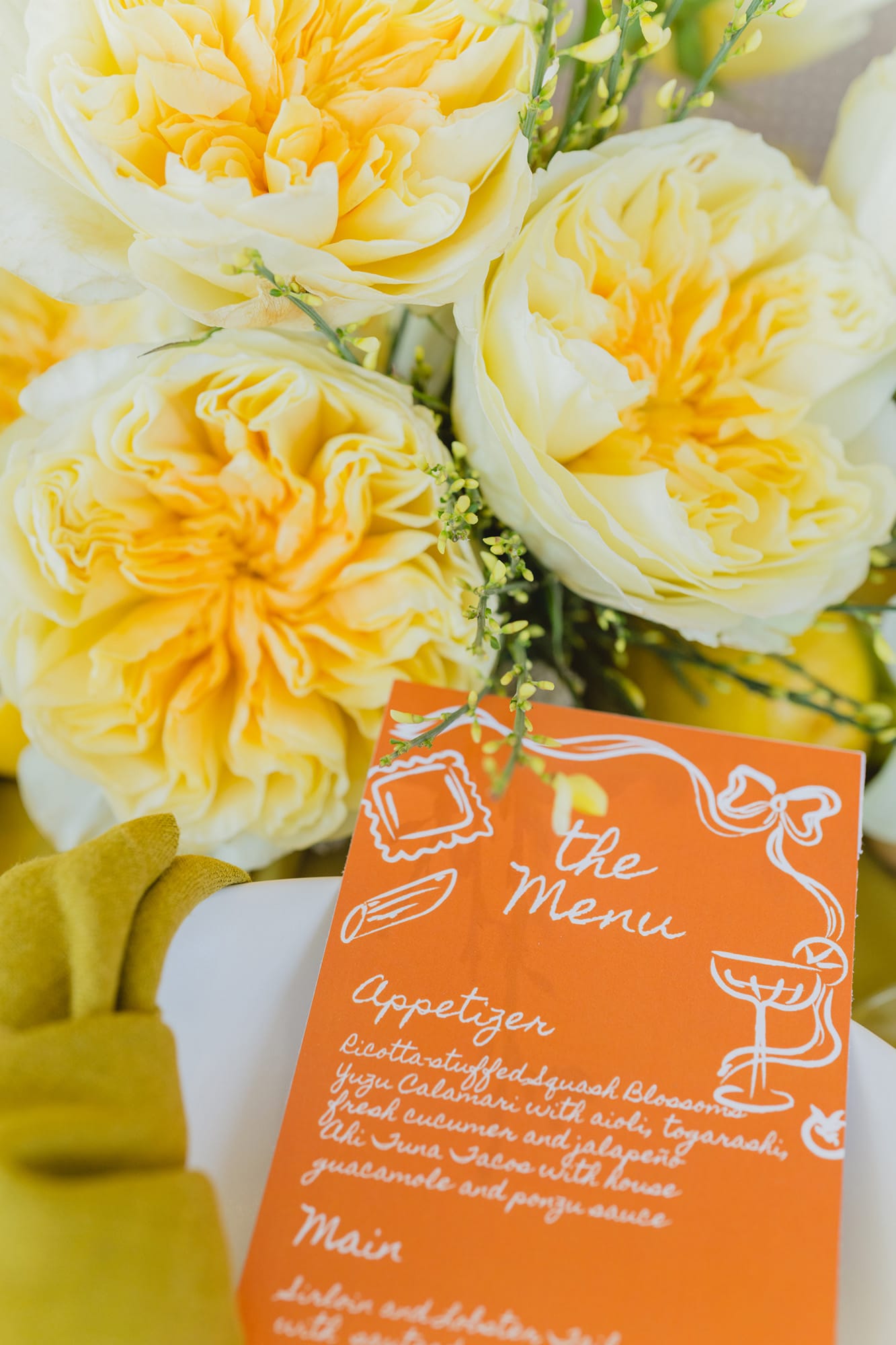
If citron feels too bold, butter yellow still works in 2026 — but it needs layering.
Think:
- Tonal florals
- Texture over contrast
- Minimal greenery
- Sculptural candles
- Butter yellow on its own can feel flat. But when layered properly, it becomes romantic and luminous.
2. Pastel Yellow Wedding Theme

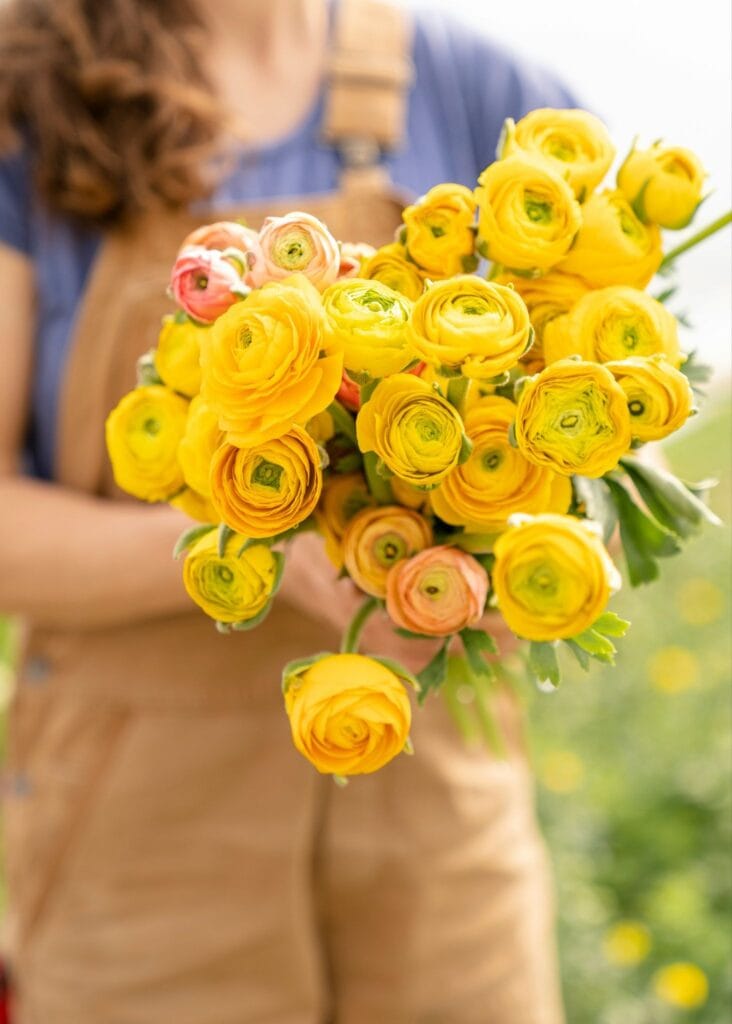
Pastel yellow leans whimsical — which works beautifully for garden weddings and spring celebrations.
To modernize it:
- Keep your florals tight and intentional.
- Avoid too many competing pastel colours.
- Add a structured design element (clean table lines, modern chairs, architectural ceremony setup).
Legal: unsplash license
3. Yellow and Green Wedding Theme
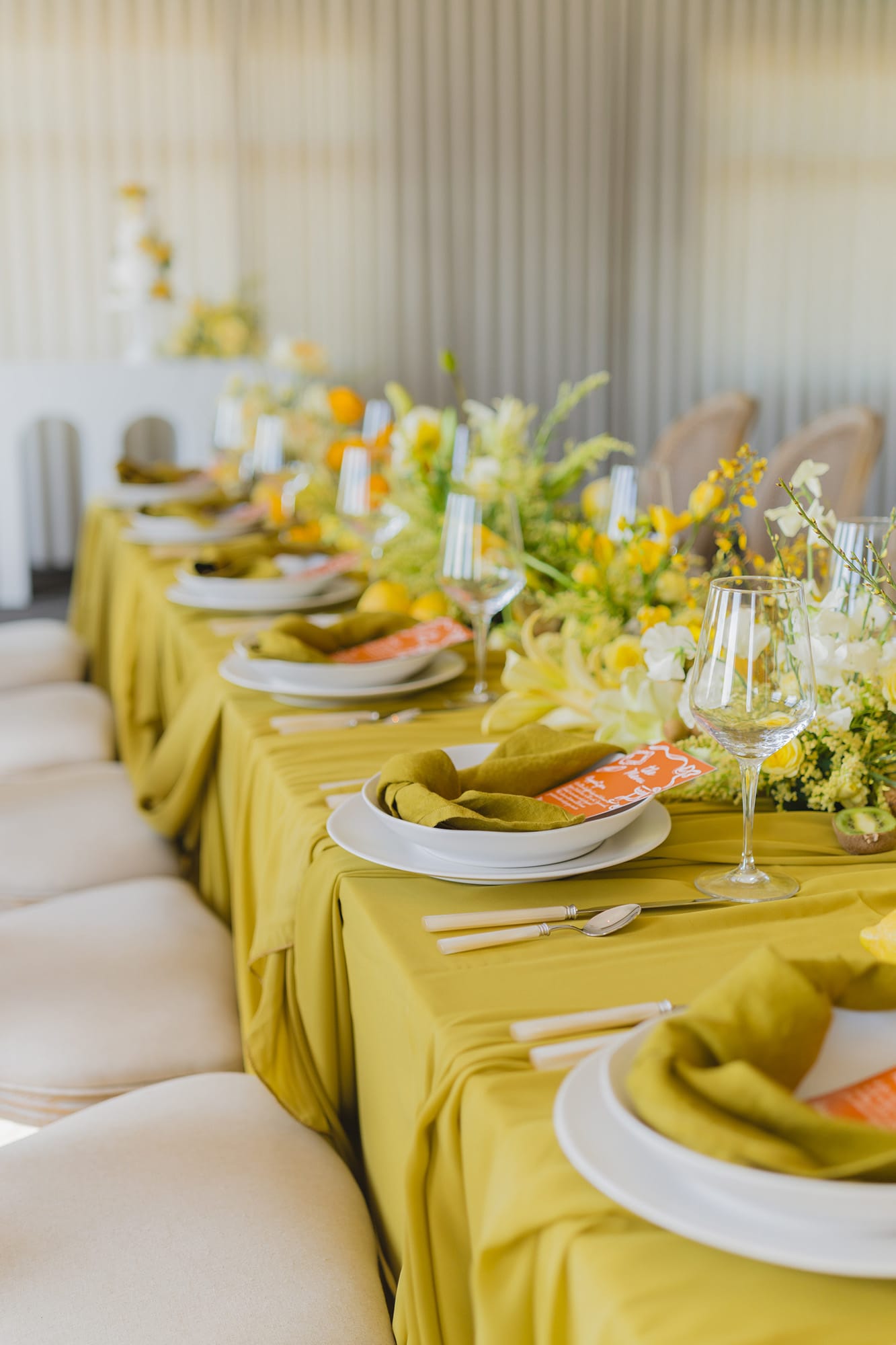
This is where 2026 lives.
Not sage and sunflower. Not rustic barn. But Chartreuse. Citron. Olive. Soft cream. Layered intentionally.
Green tones prevent yellow from overwhelming the space. They create depth and keep the palette feeling grounded.
This combination works especially well in:
- Botanical venues
- Outdoor coastal spaces
- Modern indoor venues with strong natural light
4. Sunshine Yellow Wedding Theme (Used Strategically)
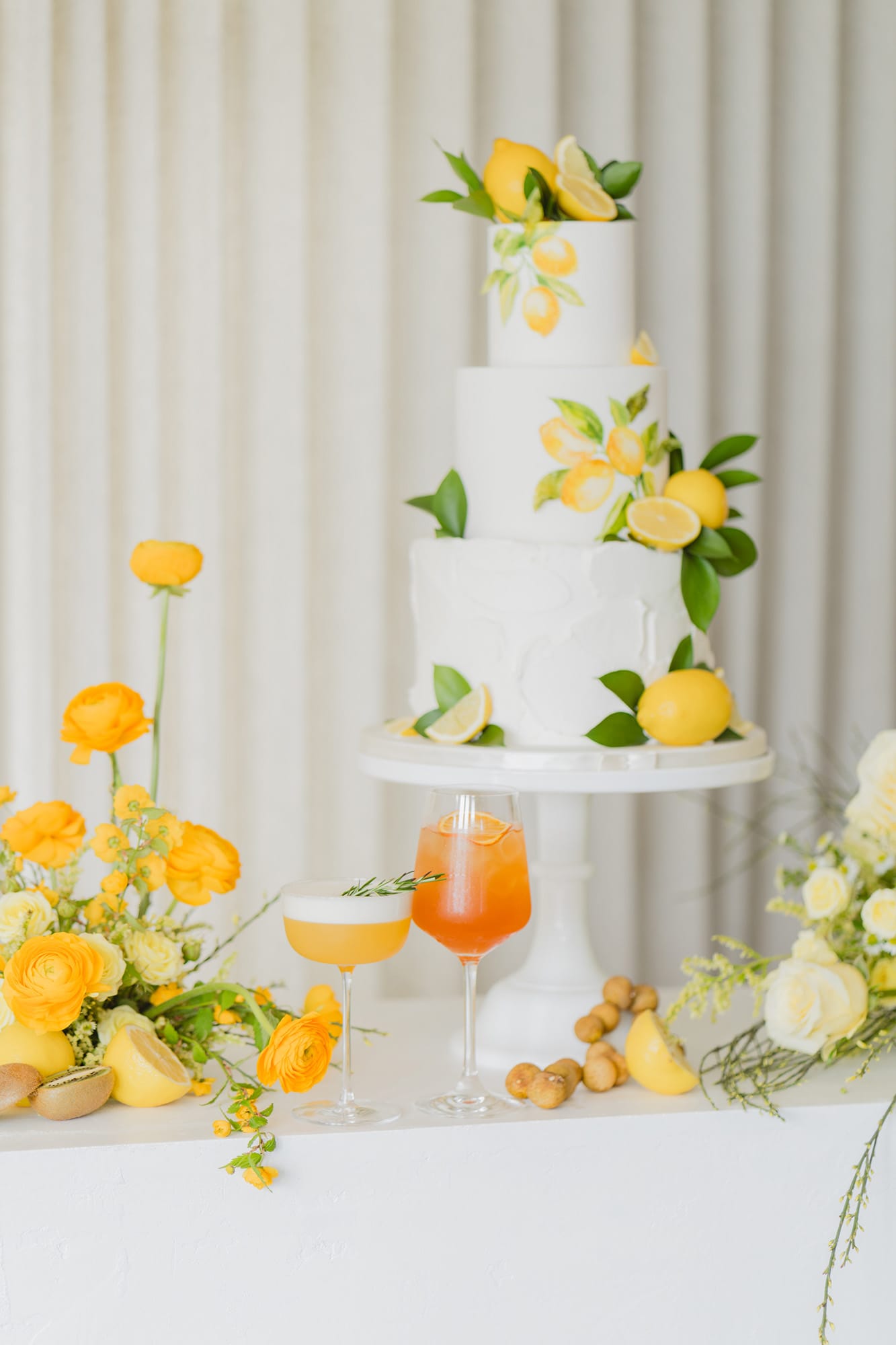
Bright sunshine yellow isn’t out — it just needs discipline, Not as the entire palette.
Use it as:
- Floral accents
- Fruit styling
- Cocktail details
- Cake accents
5. Lemon Yellow Wedding Theme
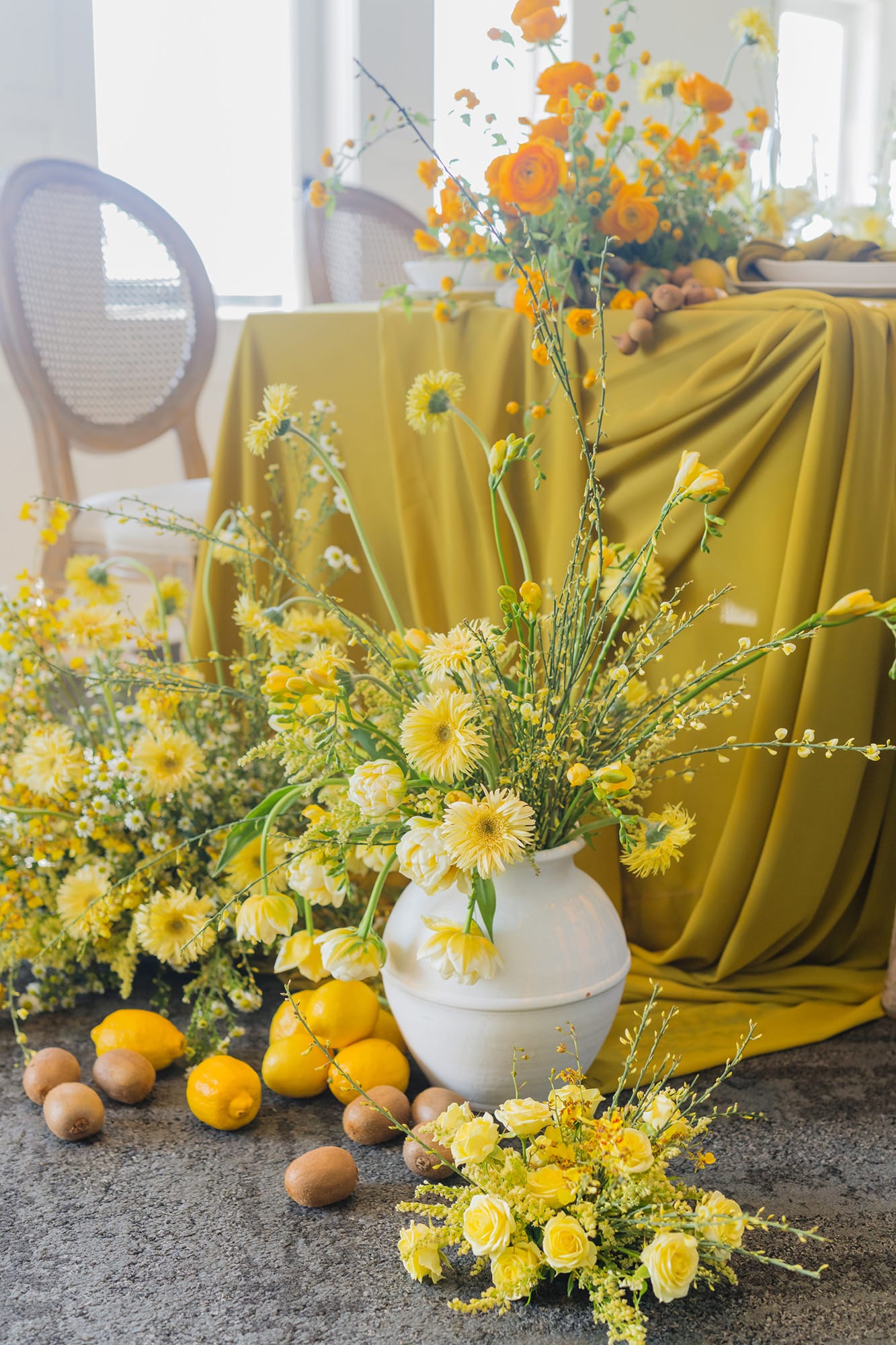
A citrus-forward wedding theme works beautifully when yellow is treated as an accent.
Think:
- Lemons integrated into centrepieces
- Citrus cocktails at cocktail hour
- Fruit woven into floral installations
- Hand-painted cake details
This feels playful — but elevated.
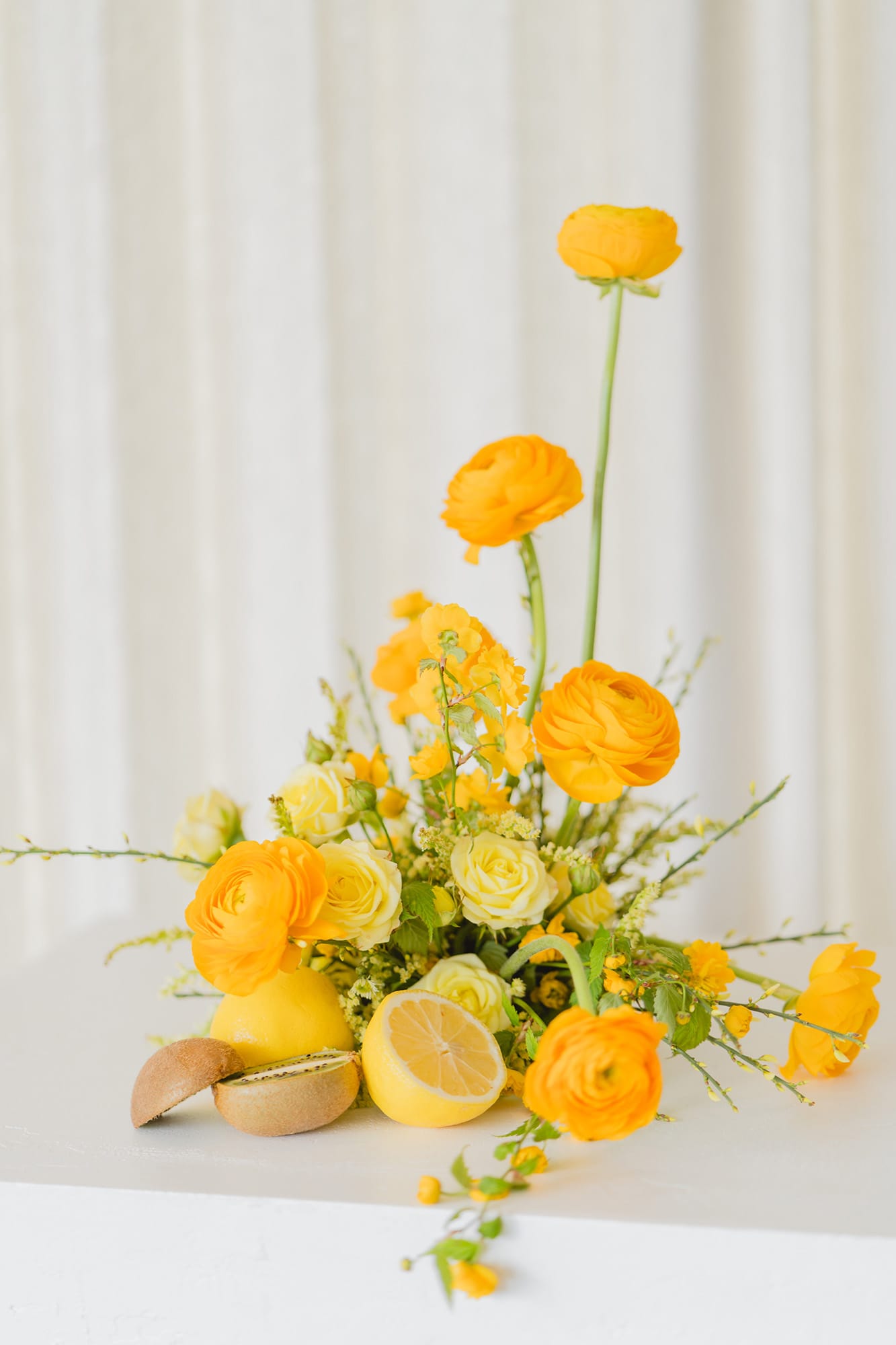
6. Editorial Yellow Wedding Design
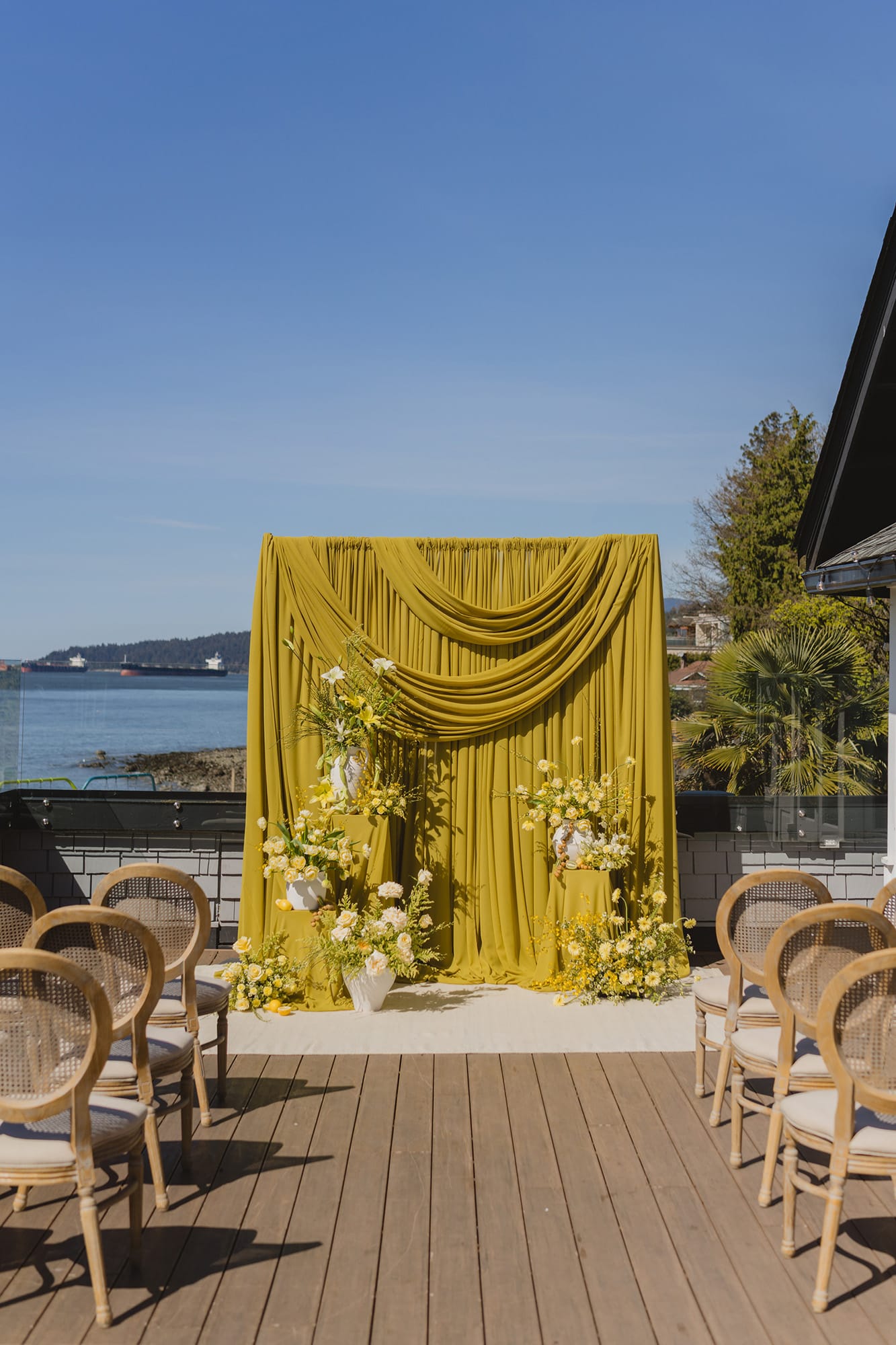
If you’re drawn to what you’re seeing online labelled as “colour of the year” — you’re noticing something real.
Trend authorities across fashion and interiors have spotlighted yellow-green tones as emerging statement colours for 2025–2026. You’ll see citron and chartreuse referenced in runway collections, interior forecasts, and wedding trend roundups alike.
The key difference?
Editorial design leads. Pinterest follows.
Our approach with Thistle & Thorne is never to chase colour trends. It’s to interpret them through thoughtful, layered design.
That’s how yellow becomes timeless — not trendy.
Picking the Right Shade of Yellow
The shade you choose does more than set the mood — it interacts with everything around it. Venue lighting. Skin tones. Fabric texture. Floral selection. Photography style. It’s the difference between a palette that feels intentional and one that falls flat.
Yellow, especially, responds to its environment in very specific ways. Walls, flooring, and floral backdrops all play a role in how it reads — whether it feels soft and atmospheric or sharp and overpowering. The goal isn’t just choosing a colour, it’s placing it correctly. Think shaded garden corners, sun-drenched terraces, or against darker architectural elements where the tone can hold its depth without overwhelming the frame.
Quick yellow tone guide:
- Soft buttery tones glow in diffused light.
- Chartreuse thrives in bright, natural light.
- Bold citron can look electric in direct sun — so balance with neutrals.
- A yellow and green wedding theme benefits from depth variation.
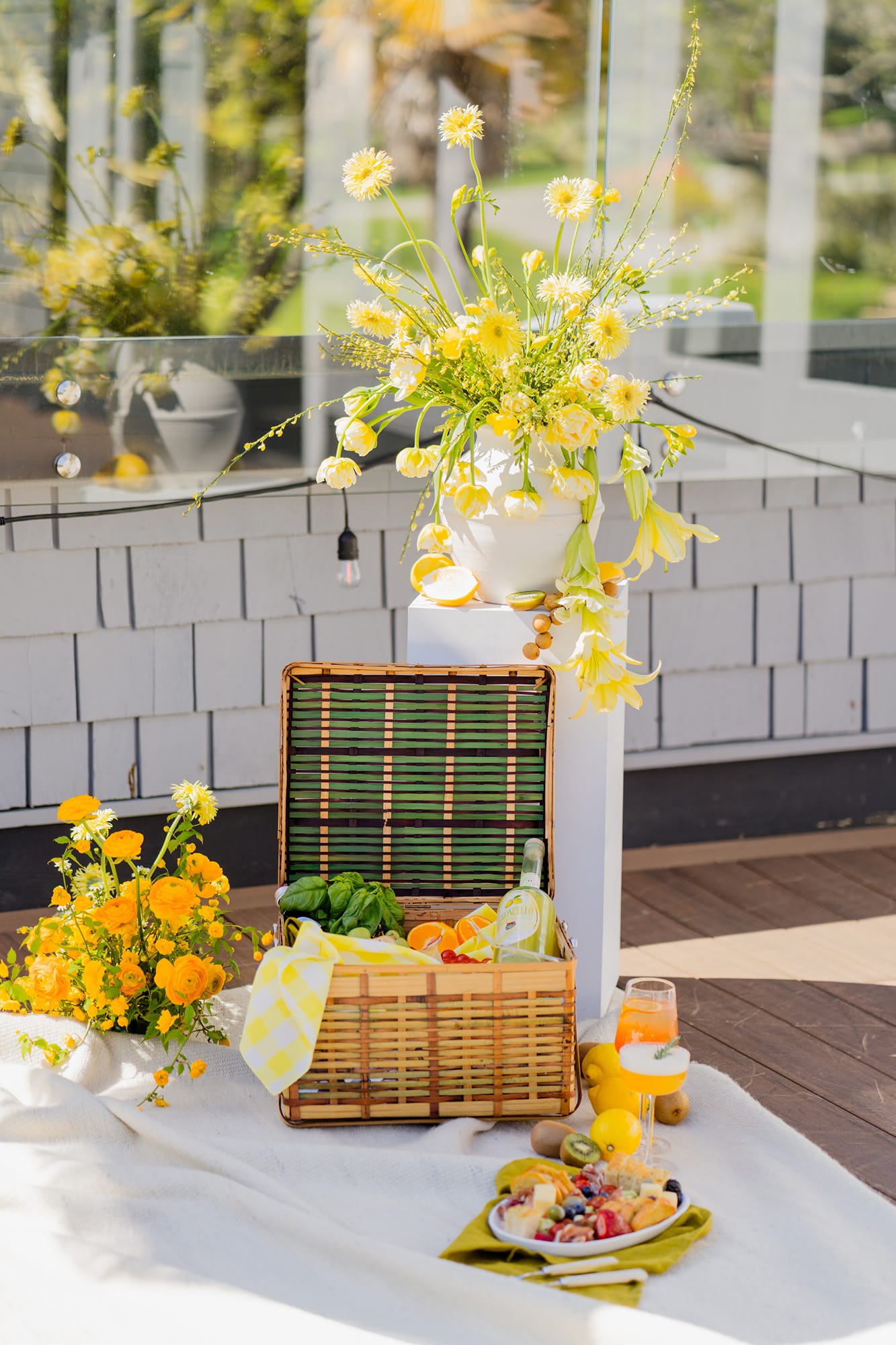
Yellow for the Right Skin Tone
Not every yellow flatters every skin tone — but the right shade makes all the difference. Colour should enhance you, not compete with you.
Yellow Skin Tone Guide:
- Fair to medium skin tones often glow in soft butter and pastel yellow.
- Medium to deeper skin tones shine in golden, marigold, and rich citron.
- Mixing tonal variations across your wedding party is often the most inclusive (and visually interesting) solution.
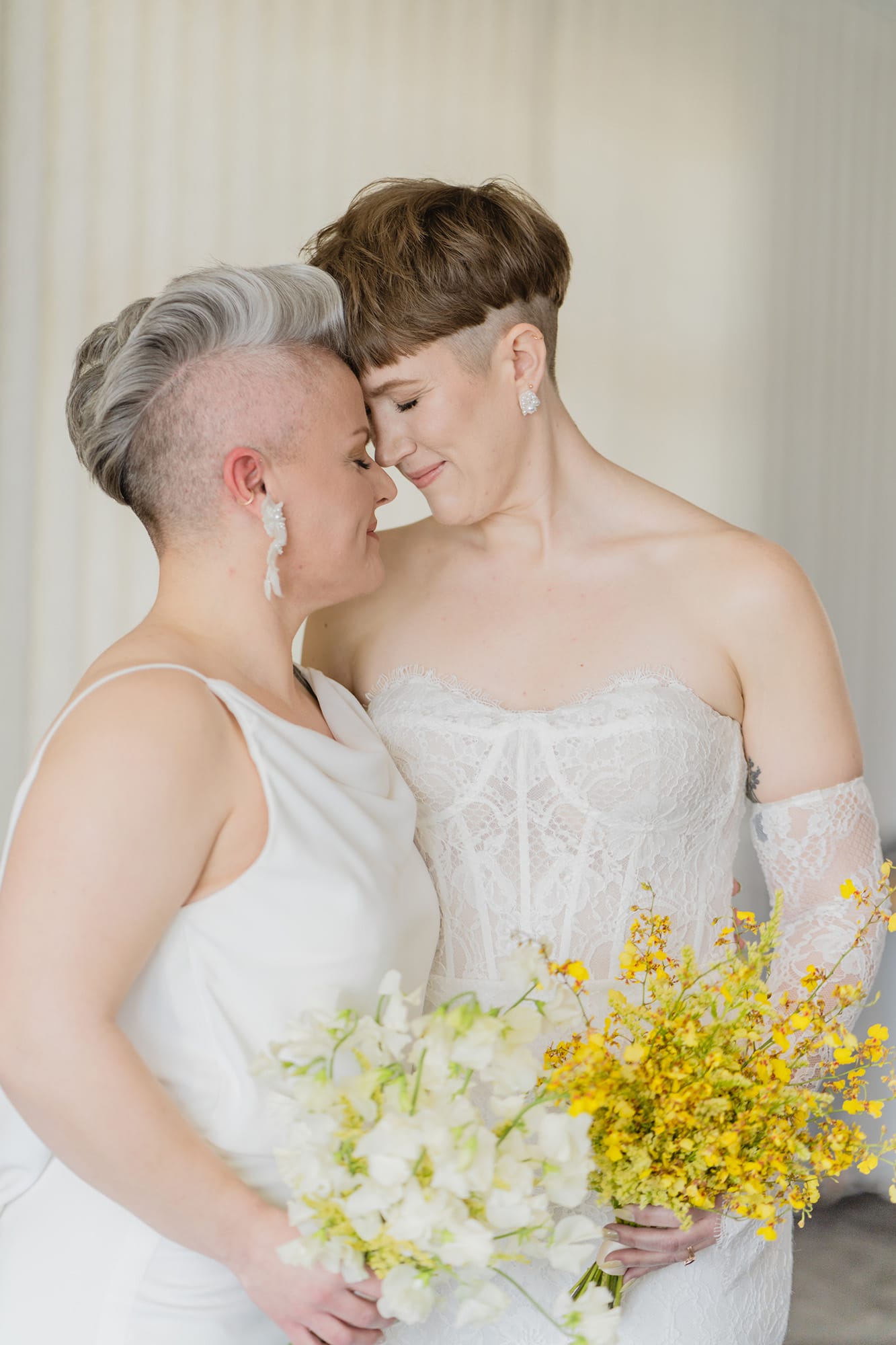
Seasonal and Destination Tips
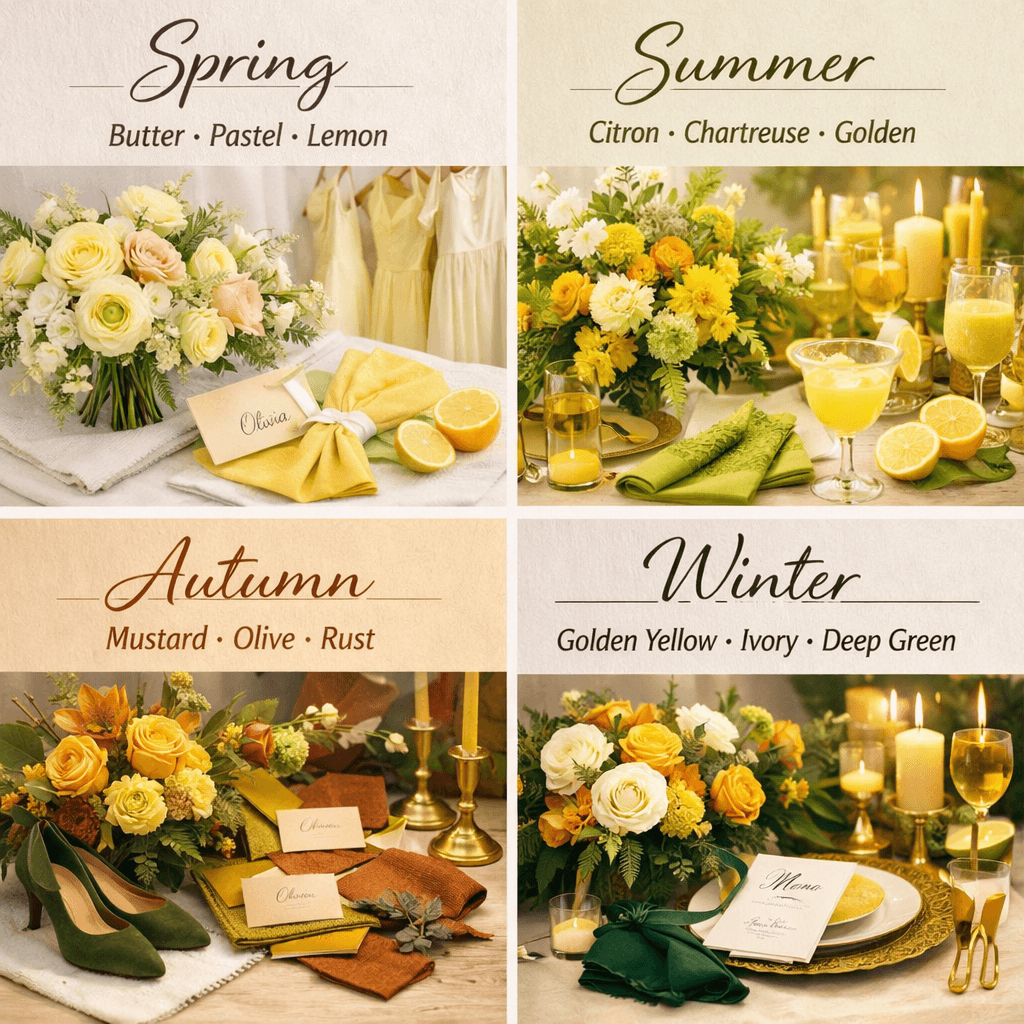
Colour doesn’t exist in a vacuum — it shifts with the seasons, taking on different depth, light, and energy depending on when your wedding takes place.
What feels soft and airy in spring can read flat in winter. What feels bold and vibrant in summer might feel out of place in autumn. The key is working with the season, not against it.
Think of your palette as a reflection of the environment around you — the light, the landscape, the overall mood. When your colours align with the season, everything feels more cohesive, more elevated, and far more effortless.
Spring Weddings
- Shades: Soft pastel yellow, butter, or lemon tones.
- Why it works: These colors complement the fresh greenery and blooms of spring, creating a romantic, airy feel.
- Lighting & Photography: Soft natural light enhances pastel yellows, making bouquets and décor appear luminous and delicate.
- Tips: Pair with blush, soft grey, or light green to keep your palette gentle and elegant.
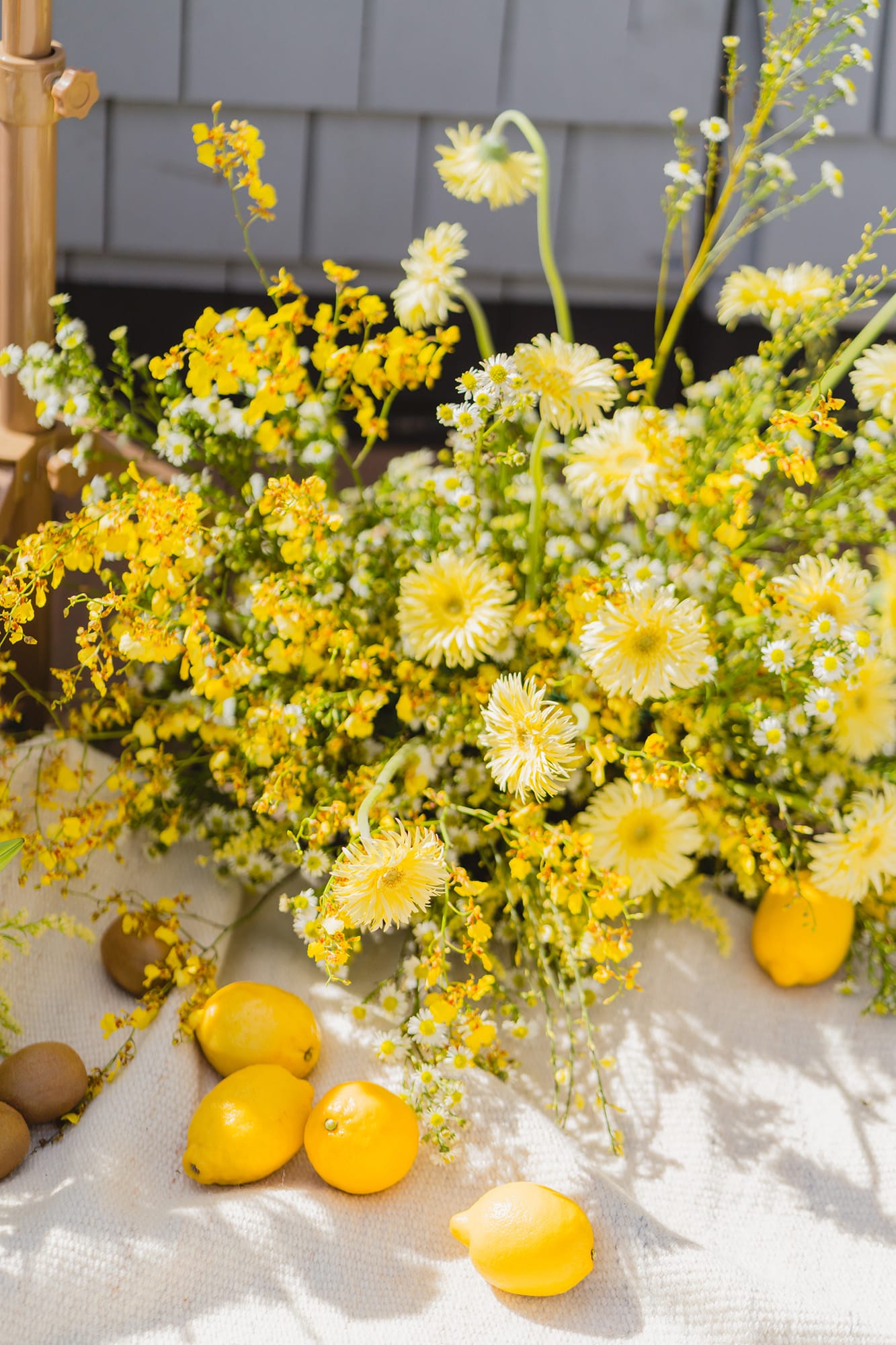
Summer Weddings
- Shades: Bright yellows like sunshine, daffodil, or gold.
- Why it works: Bold yellows match the energy of summer, making your wedding feel vibrant and joyful.
- Lighting & Photography: Direct sunlight can intensify bright yellows—use shaded areas for portraits or mix in softer accents to prevent color from looking harsh on camera.
- Tips: Pair with navy, teal, or white to balance the brightness, and incorporate natural elements like sunflowers or citrus for a seasonal touch.
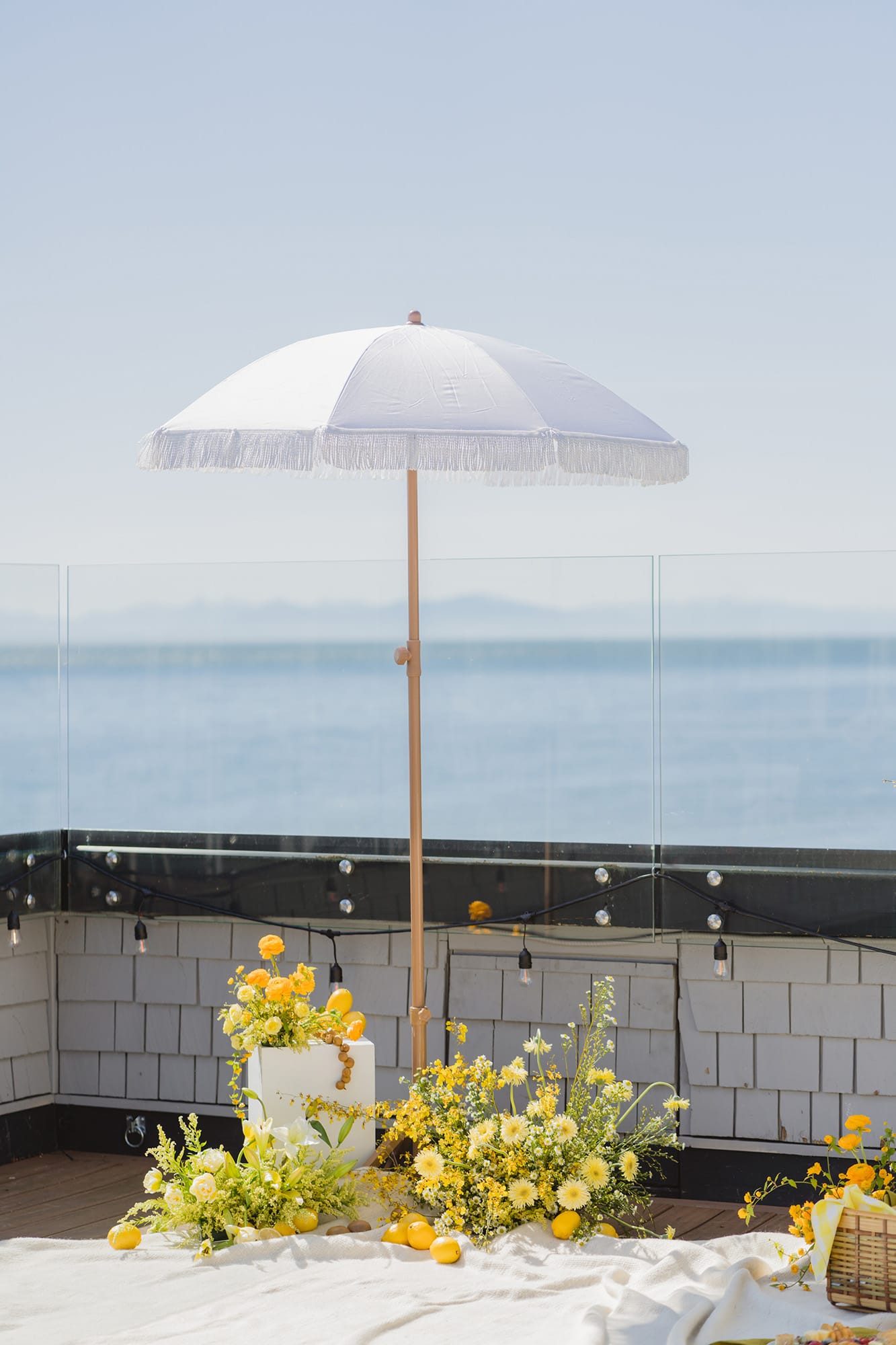
Autumn Weddings
- Shades: Mustard, marigold, and yellow-and-green combinations.
- Why it works: These richer, earthy tones complement autumn foliage and warm interiors.
- Lighting & Photography: Golden-hour light enhances these shades, adding warmth to photos and creating a cozy atmosphere.
- Tips: Pair with rust, burnt orange, deep green, or soft browns for a layered, sophisticated look.
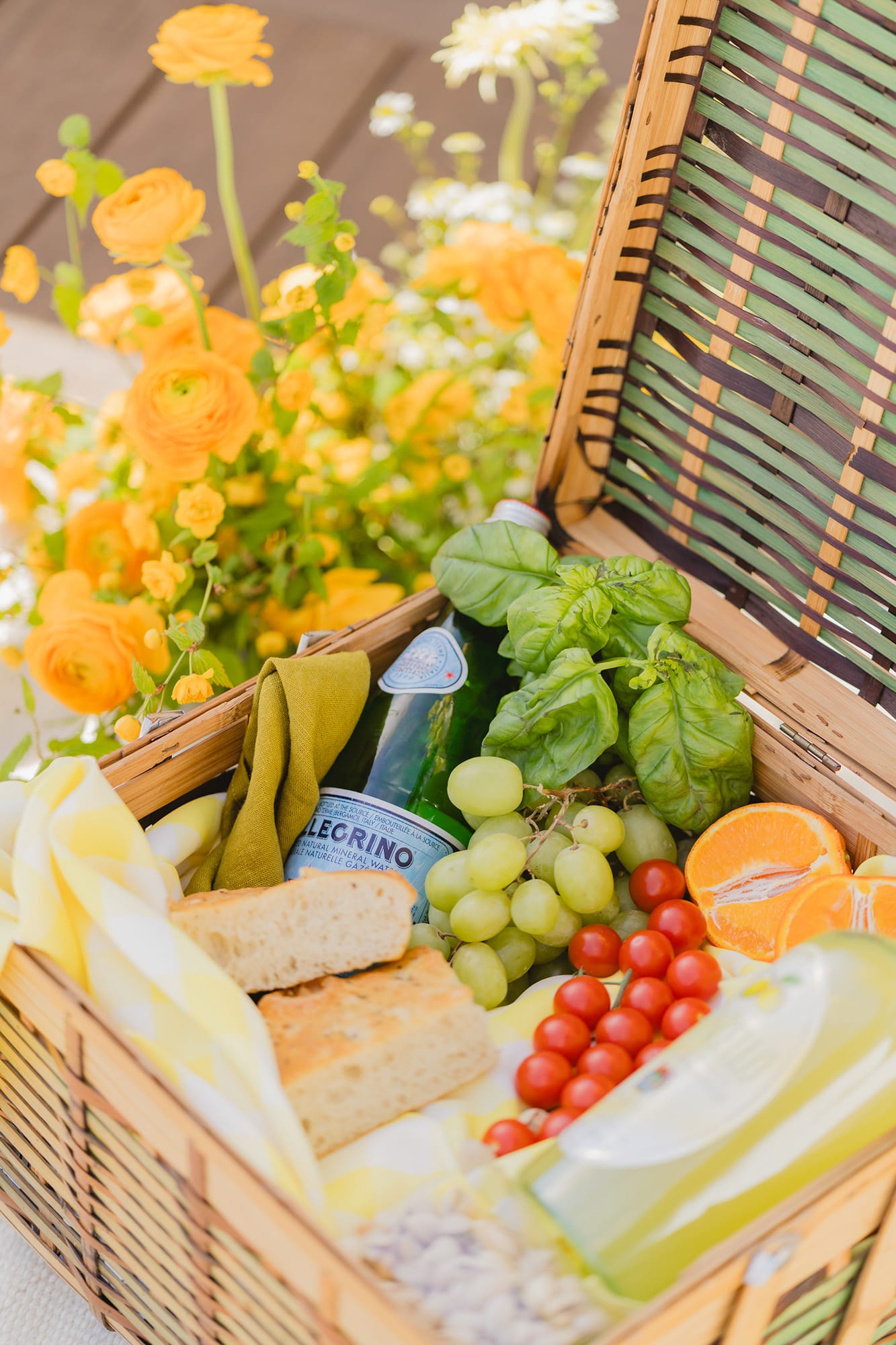
Winter Weddings
- Shades: Golden yellow, mustard, or deeper marigold tones.
- Why it works: Yellow adds warmth and contrast against neutral or muted winter backdrops.
- Lighting & Photography: Indoor lighting may shift yellow tones—consider soft LED or candlelight to preserve warmth.
- Tips: Pair with grey, ivory, or deep jewel tones to keep the palette rich and elegant.
Yellow Bridesmaid Dresses: Inspiration
- Yellow Bridesmaid Dress Inspiration (Kennedy Blue) – Gallery of butter, marigold, mustard, and satin yellow bridesmaid styles across seasons.
- 22 Best Yellow Bridesmaid Dresses (The Knot) – Inspiration from maxi gowns to chiffon silhouettes and statement styles.
- Yellow Bridesmaid Ideas on Pinterest (collection) – Crowdsourced boards with a variety of scenic wedding party dress ideas.
Yellow Wedding Decor Ideas
Yellow can show up in ways that feel layered, intentional, and far from expected. It’s not just about where you use it — it’s how consistently and thoughtfully it carries through the entire experience.
Where it works beautifully:
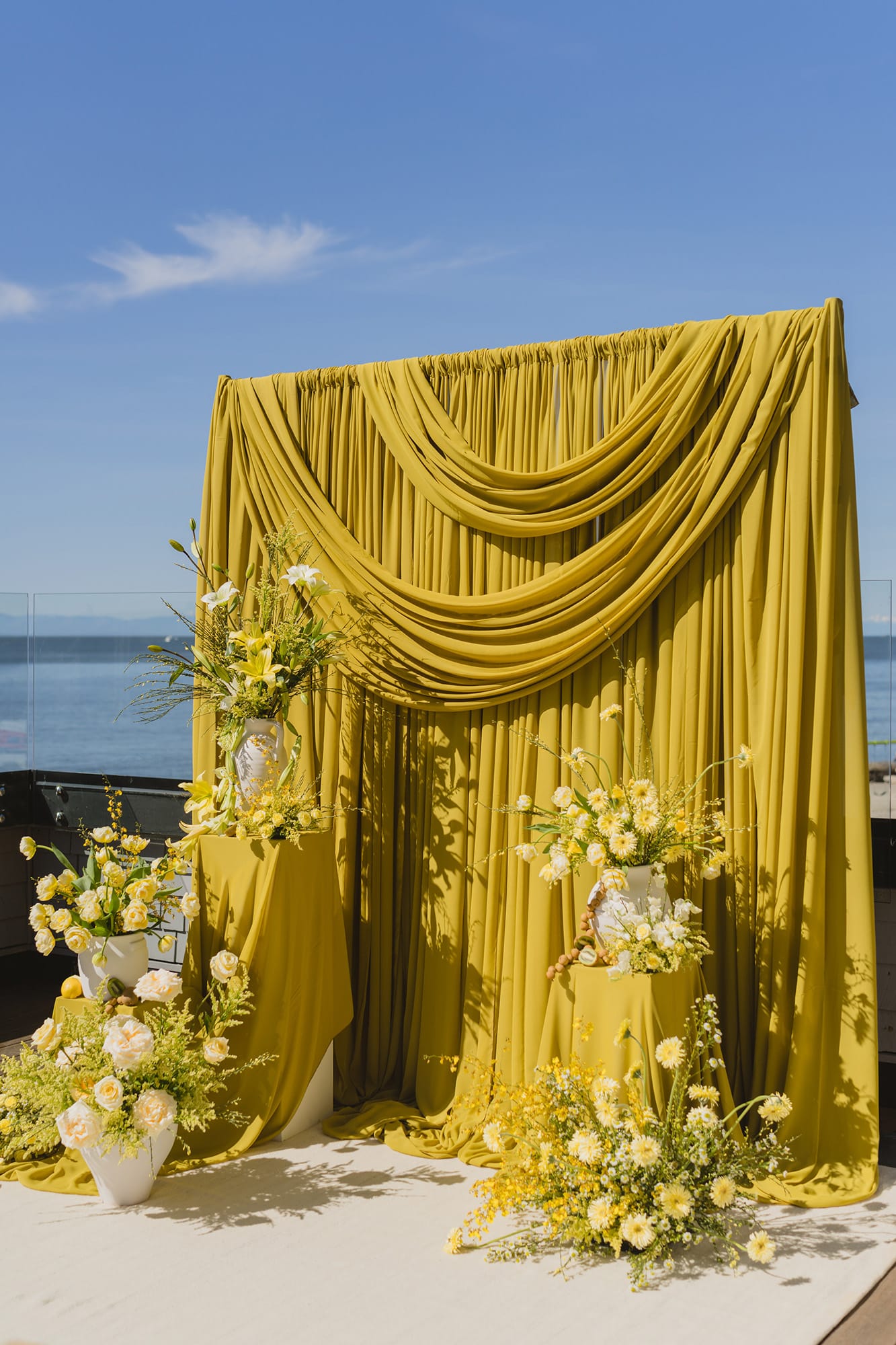
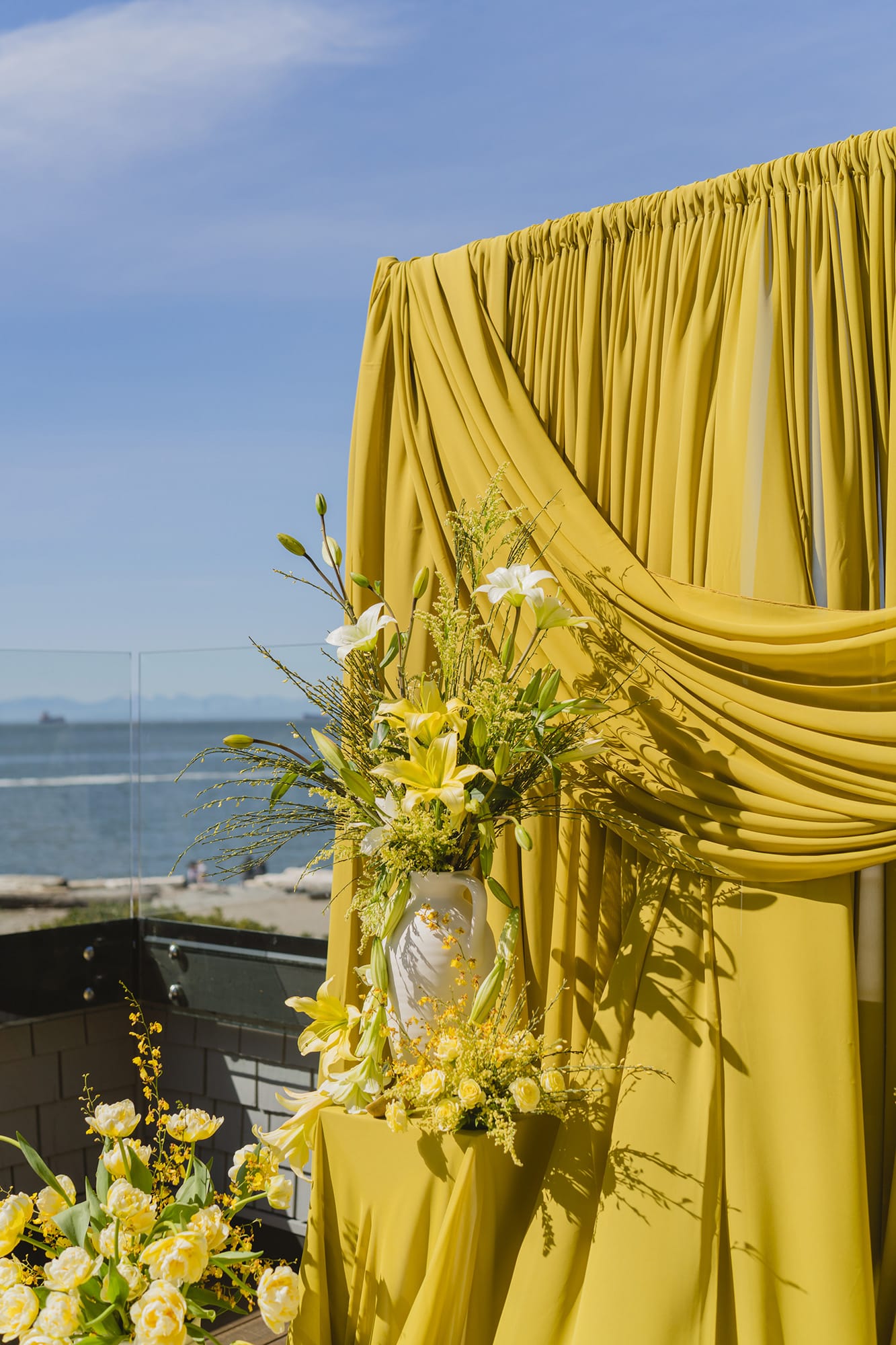
- Draped ceremony backdrops
- Tonal floral installations (bouquets, centrepieces, arches)
- Statement linens, textured napkins, and layered table settings
- Fruit-integrated centrepieces (lemons, citrus, seasonal elements)
- Signature cocktails and coloured glassware
- Hand-painted cakes or dessert details
- Sculptural bud vase moments
- Bridesmaid dresses, ties, and subtle bridal party accents
- Playful but elevated stationery (menus, signage, programs)
- Small details like ribbon wraps, chair sashes, lanterns, and hanging décor
Especially in outdoor or destination settings, natural elements — like sunflowers, lemons, or golden leaves — make yellow feel organic rather than styled.
The difference between trendy and timeless is always in the restraint.
Weddings on your terms
Written by : Jodie Garneau
Many couples begin wedding planning with a clear picture of what the day is supposed to look like. Loud music, full timelines, large groups, and constant social interaction are often treated as standard. For many neurodivergent people, including autistic, ADHD, and AuDHD couples, that structure can quickly feel overwhelming. A wedding should reflect the couple experiencing it, not force them into something that drains their energy.
A neurodivergent wedding is about designing the event in a way that respects how you and your partner move through the world. That can include sensory considerations, pacing, communication styles, and emotional safety. Some couples need quiet space and slower schedules, while others want structure that removes uncertainty. The goal is a wedding day where you can stay present, comfortable, and connected to your loved ones.
At Thistle & Thorne Weddings, this approach is part of the planning process. Many of the wedding vendors the team collaborates with are neurodivergent themselves, which means communication and workflows are flexible and thoughtful. Couples often find it incredibly helpful to work with a team that understands how different brains process events and stress. If you are looking for support, working with a Wedding Planner can make the entire experience much smoother, but this blog is written by our team to give you the most direction we can from our own experiences!
Key Takeaways
- A neurodivergent wedding focuses on comfort, pacing, and sensory awareness so couples can actually enjoy their wedding day.
- Small adjustments such as quiet spaces, flexible timelines, and supportive vendors can make a wedding far more accessible for both couples and guests.
- The most meaningful weddings happen when couples design the celebration around their real needs instead of traditional expectations.
Table of contents
- Sensory Considerations for Neurodivergent Friendly Weddings
- Quiet Spaces and Recharge Rooms
- Build In Breaks and Pacing
- Reduce the Spotlight
- Smaller Guest Counts and Familiar Faces
- Vendor Support and Coordination
- Flexible Wedding Structures
- Designing for Emotional Safety
- Practical Tools for Regulation
- Dance Floor Strategies for Sensory Friendly Weddings
- FAQ: Neurodivergent Weddings
Understanding a Neurodivergent Wedding
A neurodivergent wedding simply means designing the event around how your brain and body experience the day. Traditional weddings often assume everyone enjoys the same environment, pace, and level of attention. For many neurodivergent people that assumption does not hold true. Thoughtful planning allows couples to adjust the structure so the day supports them.
This approach can include smaller ceremonies, more space between activities, or choosing a wedding venue that feels calm instead of crowded. Some couples adjust lighting, music, and guest flow. Others focus more on social comfort and predictable schedules. Every neurodivergent wedding looks different because every couple has their own experience.
Redefining What Success Looks Like
Many couples feel pressure to create a perfect day based on outside expectations. Neurodivergent couples often realize that those expectations do not match what actually makes them feel safe and happy. Letting go of those ideas can be freeing during the wedding planning process.
Success might look like a quiet ceremony, meaningful private vows, and a relaxed dinner with friends. For another couple it might mean a lively party with clear breaks and a flexible timeline. The goal is not copying another wedding. The goal is creating an event that feels right for you and your partner.
For The Guests
Guests may notice quiet rooms, scheduled breaks, or a flexible schedule during the wedding day. These choices are intentional and designed to support the couple and other neurodivergent people attending. A little patience helps everyone stay comfortable and enjoy the celebration together.

Sensory Considerations for Neurodivergent Friendly Weddings
Manage Sound and Music
Sound is one of the biggest sensory factors during a wedding. Microphones, music, large groups, and echoes inside a venue can quickly build into overload. Couples often work with DJs or bands to keep sound levels manageable throughout the event. Thoughtful speaker placement also helps prevent guests from feeling surrounded by noise.
Some couples rethink how their dance floor works. A silent disco allows guests to choose music through headphones, which keeps the room quieter overall. Guests who want to dance can fully enjoy it, while others relax without the constant volume. This approach often makes the reception more comfortable for everyone.
Lighting and Visual Stimulation
Lighting has a major impact on how a space feels during a wedding. Harsh overhead lights or flashing lights on the dance floor can be overwhelming for some guests. Softer lighting, candles, or warm bulbs can make the venue feel calmer and easier to navigate. Even small changes can dramatically affect the environment.
Visual stimulation matters as well. Busy décor, moving lights, and crowded layouts can create stress without couples realizing it. A simple layout with breathing room helps guests move comfortably through the space. Many couples find that a cleaner design also makes the event feel more intentional.
Temperature and Food Comfort
Temperature can affect mood and sensory tolerance during a long wedding day. Overheating is common during crowded receptions or summer ceremonies. Some couples plan outfit changes, lighter clothes, or quiet outdoor spaces to cool down. Even small comfort adjustments can help people stay present.
Food choices are another helpful consideration. Offering variety during dinner or cocktail hour helps guests with texture sensitivities or food aversions. Familiar options and flexible serving styles allow people to eat at their own pace. This small detail can make a big difference for neurodivergent guests.

Quiet Spaces and Recharge Rooms
A dedicated quiet space can completely change how a wedding feels. Weddings are social events, but constant interaction can be exhausting. A calm room gives people permission to step away and reset for a few minutes. Guests often return feeling more relaxed and ready to celebrate again.
Some couples set up a sensory room with low lighting, comfortable seating, and simple activities. Sketch books, fidget tools, or quiet games can help people regulate. Others keep the room minimal and peaceful so it remains a true break from stimulation. The key idea is giving people somewhere to rest without pressure.

Build In Breaks and Pacing
Create a Manageable Schedule
Many weddings move quickly from ceremony to cocktail hour to dinner and then straight onto the dance floor. For many neurodivergent people, that pace can feel exhausting before the reception even begins. A thoughtful schedule gives everyone room to transition between moments rather than rushing through them. Slowing the timeline often makes the entire wedding day feel calmer.
Clear communication helps guests manage their own energy as well. Sharing the schedule ahead of time removes uncertainty and helps people know when to socialize, eat, or rest. Cocktail hour can become a gentle buffer rather than a crowded waiting period. Some couples add seating areas, lawn games, or quiet conversation spaces so guests can engage at their own pace.
Protect Couple Time
The couple also deserves intentional breaks throughout the wedding day. A short pause after the ceremony can help regulate emotions and reset before greeting guests. Some couples step away before dinner or during cocktail hour for a quiet moment together. Protecting this time helps the rest of the evening feel more manageable.
These small pauses also give couples time to actually process the moment of getting married. Weddings move quickly and emotions can blur together without a break. Ten minutes alone can bring the focus back to the relationship instead of the schedule. Many couples later say these were the most meaningful moments of the day.

Reduce the Spotlight
Rethink Traditional Moments
Traditional weddings often place couples at the center of attention for long stretches of time. For many neurodivergent people, that level of visibility can feel overwhelming rather than celebratory. Rethinking certain traditions allows the ceremony and reception to feel more relaxed, natural, and aligned with the couple’s comfort. Small adjustments can make a meaningful difference in how the day unfolds.
- Shorten the ceremony or simplify speeches to reduce time in the spotlight
- Share private vows earlier in the day so the public ceremony stays calm
- Use a shorter aisle, circular seating, or alternative layouts to make entrances less overwhelming
- Adjust or remove traditions that feel performative, like bouquet tosses or long announcements
- Focus on connection and shared experiences rather than constant visibility
Alternatives to Spotlight Events
The first dance can still be meaningful without putting pressure on the couple. Some partners dance privately before the reception begins or invite everyone onto the dance floor partway through the song. This shifts the focus toward community rather than performance. The moment still feels emotional but far less overwhelming.
Other traditions can be adjusted in similar ways. Couples sometimes skip bouquet tosses or long announcements that require attention. Instead, the reception focuses on conversation, dinner, and time with friends and family. The celebration still feels joyful while protecting the couple’s energy.

Smaller Guest Counts and Familiar Faces
Guest count plays a major role in how a wedding feels. Large crowds bring noise, unpredictability, and social pressure that can quickly overwhelm neurodivergent people. Smaller weddings allow couples to focus on the people who matter most. This often creates a calmer and more supportive atmosphere.
Keeping the guest list intentional also helps conversations feel easier. Couples may skip open plus ones or large extended circles of acquaintances. Meeting vendors before the wedding day can also reduce uncertainty and build trust. When the room is full of familiar people, the entire event becomes more comfortable.
Vendor Support and Coordination
The Role of Wedding Planners
Experienced wedding planners can make the entire planning process far more manageable. They coordinate logistics, keep the schedule on track, and help couples avoid decision fatigue. On the wedding day, they act as a protective buffer between the couple and outside stress, allowing partners to stay present with their guests and enjoy the moment.
Planners often step in when situations become emotionally intense. This can include redirecting family members, managing unexpected challenges, or handling difficult conversations on behalf of the couple. Many clients find this incredibly helpful because it preserves their peace and ensures the day flows smoothly.
A strong planner understands the couple well enough to advocate for them, and working with Thistle & Thorne ensures your wedding day stays calm, joyful, and fully focused on your experience.
Work With the Right Team
Choosing supportive wedding vendors is just as important as the planner. Vendors who understand neurodivergent needs will adapt their approach without making it a big issue. A thoughtful wedding photography business, for example, allows pauses, flexible timelines, and quieter directions during portraits. This keeps the couple from feeling rushed or overstimulated.
Communication during the planning process helps everyone stay aligned. Couples can share sensory preferences, schedule limits, and expectations early. Vendors then know how to structure the day in a supportive way. When the team understands the couple, the entire wedding runs more smoothly.

Flexible Wedding Structures
Some couples realize that a traditional timeline does not fit their needs. Separating the ceremony and reception onto different days can make the experience easier to manage. One day can focus on the ceremony while another becomes a relaxed celebration with guests. This structure gives couples time to recharge between events and fully enjoy each part of their wedding day.
Shorter celebrations can also be highly effective. Instead of planning an all-day affair, couples might host a simple ceremony followed by dinner or conversation. This approach keeps the day meaningful while reducing exhaustion and sensory overload.
Flexible wedding structure ideas:
- Separate the ceremony and reception onto different days to allow downtime
- Host a short ceremony followed by a relaxed dinner instead of a full-day event
- Limit long formal traditions that require sustained attention
- Create a timeline with built-in breaks for both the couple and guests
- Prioritize quality time with loved ones over fitting everything into one day
Designing for Emotional Safety
Emotional safety plays a huge role in how a wedding day unfolds. Couples should feel comfortable stepping away, declining traditions, or taking breaks when needed. Removing performance pressure helps people stay present instead of managing stress. Guests usually respond positively when expectations are clear.
Choosing the right venue also supports this environment. Familiar locations or calm spaces often reduce anxiety before the ceremony even begins. When couples feel safe in the environment around them, they are more able to enjoy the moment. The focus shifts back to the commitment they are making together.

Practical Tools for Regulation
Small comfort items can make a noticeable difference during a wedding day. Many neurodivergent people rely on familiar tools that help regulate energy, focus, and sensory input. Keeping these items nearby provides reassurance during busy moments like the ceremony or cocktail hour. Preparation helps couples move through the event more comfortably.
Helpful regulation tools may include:
- Earplugs or noise cancelling headphones for loud environments
- Small fidget tools or grounding objects
- Water, electrolytes, and easy snacks throughout the day
- A personal kit with tissues, wipes, medication, or lip balm
- Access to a quiet space for short sensory breaks
Clothing choices also play a major role in comfort. Tight clothing, unfamiliar fabrics, or untested shoes can become frustrating quickly during a long event. Planning ahead helps couples stay focused on the celebration instead of physical discomfort. Small adjustments often make a big difference.
Clothing and comfort strategies may include:
- Breaking in shoes before the wedding
- Choosing breathable clothes that allow movement
- Bringing backup socks, shirts, or layers
- Planning an outfit change between ceremony and reception
- Scheduling short rest periods in a private room
These simple tools help both partners stay grounded and present throughout the wedding.

Dance Floor Strategies for Sensory Friendly Weddings
The dance floor can be one of the most stimulating parts of a wedding reception. Loud music, flashing lights, and crowded spaces quickly increase sensory load for many guests. Thoughtful adjustments allow couples to keep dancing while making the environment more comfortable. Even small changes can improve the experience.
Silent discos: Silent discos are becoming a popular solution. Guests wear headphones and choose their preferred music channel, which reduces overall noise in the room. Those who want to dance can still enjoy the party, while others sit nearby without the sound pressure. This flexibility keeps the celebration inclusive and fun.
Lighting Choices: Couples can also adjust lighting, music volume, and dance floor size. Lower lighting levels and fewer flashing lights reduce overstimulation. Smaller dance areas prevent the room from feeling chaotic. These decisions help the reception remain lively without overwhelming guests.
FAQ: Neurodivergent Weddings
How do I accommodate autistic guests at my wedding?
Clear communication before the event is extremely helpful. Let guests know about quiet spaces, the schedule, and any sensory friendly adjustments. Seating areas away from speakers or crowds can also help. Small considerations allow more guests to feel comfortable attending.
What are examples of low stress wedding formats?
Many couples choose shorter ceremonies followed by relaxed dinners or smaller receptions. Others separate the ceremony and celebration onto different days. Flexible timelines with built in breaks also help reduce pressure. These formats keep the event enjoyable without overwhelming the couple.
Do I need a wedding planner for a neurodivergent friendly wedding?
A planner is not required, but many couples find the support incredibly helpful. Wedding planners handle logistics, manage communication with vendors, and protect the couple’s energy during the event. This reduces decision fatigue and keeps the day running smoothly. For many neurodivergent couples, that support is invaluable.
How is autistic wedding planning different from neurodivergent wedding planning?
Autistic wedding planning often focuses strongly on sensory control, predictability, and clear structure. Neurodivergent wedding planning includes a wider range of experiences such as ADHD and AuDHD. The strategies are similar but may be adapted differently for each person. The goal is always to design a wedding that genuinely supports the couple.